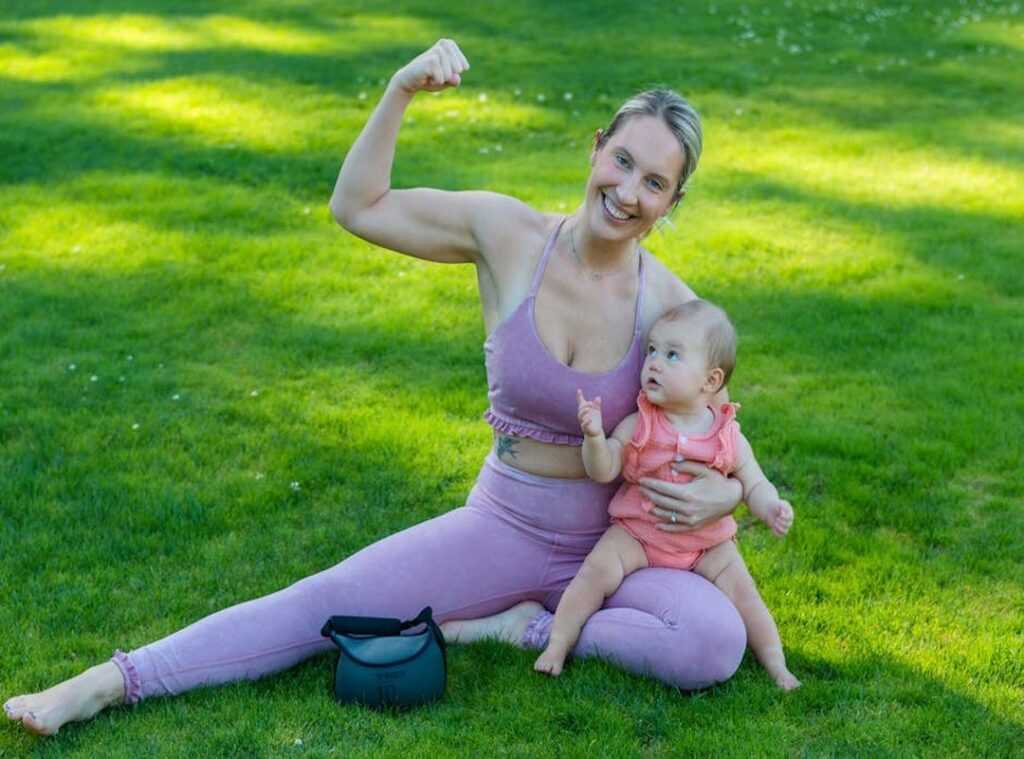
Feeling like you need to reconnect with your body after birth but overwhelmed by the pressure to “bounce back”? You’re not alone. I’ve seen it.
We’re bombarded with unrealistic expectations. This guide cuts through the noise, offering a simple, safe path to postpartum recovery fitness. It’s not just about losing weight.
It’s about nurturing your body, healing, and embracing your new life. I know firsthand the importance of listening to your body. Not punishing it.
This isn’t some generic manual. It’s built from real experiences, focusing on what truly matters: your well-being. Forget the pressure.
Start here for gentle, effective exercise that fits into your life. I’ll walk you through step-by-step, prioritizing your healing and mental well-being. Let’s make this journey about you.
Redefining Post-Baby Exercise: More Than Just ‘Bouncing Back’
Let’s cut to the chase: postpartum recovery fitness isn’t about getting back into jeans. It’s about feeling like yourself again. Trust me, when sleep is low but you need to be supermom, boosting energy levels matters more than abs.
Exercise can help, though not in the way you might think.
Forget intense workouts. Think of postnatal wellness exercise as a tool for healing. Nobody talks about the mental health boost you get from just moving your body.
It’s like a secret weapon against postpartum anxiety. And who isn’t looking for that?
Rebuilding core strength? It’s not just for the gym. It’s for lifting your baby without feeling like you’re breaking in half. (Those little ones get heavy, right?) Plus, reconnecting with your body’s signals promotes better healing.
It’s about listening to what your body needs, not punishing it.
Feeling capable and strong beats chasing a pre-baby body. If you’re curious about incorporating simple practices into your routine, this guide can be a good start. Remember, it’s not about fitting into old jeans.
It’s about redefining strength and resilience in a way that works for you.
The Green Light: Starting Your Postpartum Fitness Safely
So, you’re itching to get back to working out (I) get it. But when can you start exercising after giving birth? The golden rule is simple: get clearance from your doctor or a pelvic floor physical therapist.
Usually, this happens around the 6-week checkup, but it can vary. Don’t rush it.
Before you dive in, use this “Listen to Your Body” checklist. Are you pain-free? Is postpartum bleeding minimal or stopped?
Do you feel mentally ready? If not, give it more time. Your body just did something incredible (having a baby).
It deserves a gentle restart.
First step? Foundational reconnection. This is key for postpartum recovery fitness.
Let’s start with diaphragmatic breathing, also known as belly breathing. Lie on your back, put one hand on your belly, and the other on your chest. Inhale deeply through your nose, let your belly rise, then exhale through your mouth.
Feel your diaphragm move. This engages your core and pelvic floor.
Next, gentle pelvic floor activations or Kegels. The trick here? Lift, don’t push.
Imagine you’re stopping the flow of urine (but don’t do it when you’re actually peeing). Hold for a few seconds, then release. This is the bedrock of recovery.
Pro tip: Patience is your friend. Your body’s been through a lot. Don’t let eagerness rush your recovery.
I found more detailed guidance on postpartum recovery fitness which might be helpful.
When in doubt, remember the checklist and the breathing exercises. They set the tone for everything else.
Quick Fix: 5 Gentle Postnatal Exercises
Getting back into shape post-baby can feel like an impossible mission. But trust me, it shouldn’t have to be. Think of this as your starter kit.

Home-friendly exercises that won’t eat up your precious time (or) sanity.
Let’s start with pelvic tilts. You know that annoying lower back pain you’ve been dealing with? This is your answer.
Here’s how: 1) Lie on your back, knees bent, feet flat. 2) Flatten your back against the floor. 3) Tilt your pelvis up slightly. Why? It gets those deep abs firing again, key for postpartum recovery fitness.
Mom hack? Do it while your little one is chilling on the mat next to you.
Next, glute bridges. A personal favorite. 1) Lie on your back, knees bent. 2) Lift your hips to form a straight line from shoulders to knees. 3) Lower back down. Simple.
These strengthen glutes and hamstrings, supporting the pelvis. Fit them in during nap time. You’ll feel the burn (in) a good way.
Then there’s the trusty cat-cow stretch. If you’ve ever watched yoga, you know this move. 1) Start on all fours, hands under shoulders. 2) Inhale, arch your back (cow position). 3) Exhale, round back (cat position). It’s great for spinal mobility and tension relief.
Sneak it in before bed. Your spine will thank you.
Wall sits are next. Sounds basic but hear me out. 1) Lean against a wall, slide down until knees are at a 90-degree angle. 2) Hold. Builds leg strength without stressing the core.
Perfect when you’re brushing teeth or waiting for coffee to brew. Multitasking legends we are.
Lastly, try bird-dog. It’s not as weird as it sounds. 1) Start on all fours. 2) Extend one arm and opposite leg. 3) Alternate sides. Great for balance and core stability.
Do it while watching your favorite show (hint: a little TV isn’t the enemy).
Finding time can be tough, I know. But fitting in these little bursts of exercise can be such a game-changer. You’ll find your own rhythm eventually.
Speaking of rhythm, check out this inspiring piece on Finding Joy Everyday Motherhood. Because , it’s all about balance, right?
Know the Signs: When to Slow Down or Stop
Let’s get real about postpartum recovery fitness. It’s not about pushing through or being tough. It’s about being body smart.
Your body just created life, and it deserves some serious respect.
Ever felt sharp pain in your pelvic area? That’s your body waving a big red flag. The same goes for increased lochia or spotting bright red blood again.
Dizziness or extreme shortness of breath? Yeah, hit pause on whatever you’re doing. And if you’re feeling heaviness or bulging down there (hello, pelvic organ prolapse), it might be time to rethink your routine.
Leaking urine isn’t just embarrassing; it’s a sign your body needs a break.
Are you nodding along yet? It’s okay to admit when you’re doing too much. Resting doesn’t mean you’re failing.
In fact, it’s the opposite. It’s honoring your healing process. It’s about modifying, adapting, and giving yourself the grace to recover fully.
Remember, your postpartum journey is not a race. It’s okay to take it easy. That’s strength right there, recognizing when your body needs a breather.
Trust me, listening to your body now will pay off later. You don’t have to go full throttle all the time. Progress is progress, no matter how slow.
Take That First Step with Confidence
You’ve got a guide now. A safe and gentle roadmap for postnatal wellness. Tackling postpartum recovery fitness can feel overwhelming.
The confusion and pressure are real. Everyone’s shouting about bouncing back, but that’s not the point, is it?
Our approach? It’s about healing. It’s about mental well-being and practicality.
No more unrealistic expectations. You deserve to feel strong without the stress.
So, what’s next? This week, I challenge you: choose just one exercise from our list. Try it a few times.
Sounds simple, right? But it’s solid. Be kind to yourself.
Celebrate each small step. real progress starts.
Your journey is unique. We’re here to support you. Ready to embrace strength one gentle step at a time?
You’ve got this.
 Founder & Chief Visionary Officer
Xyphos Velmyre writes the kind of nurturing tactics and routines content that people actually send to each other. Not because it's flashy or controversial, but because it's the sort of thing where you read it and immediately think of three people who need to see it. Xyphos has a talent for identifying the questions that a lot of people have but haven't quite figured out how to articulate yet — and then answering them properly.
They covers a lot of ground: Nurturing Tactics and Routines, Daily Parenthood Highlights, Scoop Family Bonding Moments, and plenty of adjacent territory that doesn't always get treated with the same seriousness. The consistency across all of it is a certain kind of respect for the reader. Xyphos doesn't assume people are stupid, and they doesn't assume they know everything either. They writes for someone who is genuinely trying to figure something out — because that's usually who's actually reading. That assumption shapes everything from how they structures an explanation to how much background they includes before getting to the point.
Beyond the practical stuff, there's something in Xyphos's writing that reflects a real investment in the subject — not performed enthusiasm, but the kind of sustained interest that produces insight over time. They has been paying attention to nurturing tactics and routines long enough that they notices things a more casual observer would miss. That depth shows up in the work in ways that are hard to fake.
Founder & Chief Visionary Officer
Xyphos Velmyre writes the kind of nurturing tactics and routines content that people actually send to each other. Not because it's flashy or controversial, but because it's the sort of thing where you read it and immediately think of three people who need to see it. Xyphos has a talent for identifying the questions that a lot of people have but haven't quite figured out how to articulate yet — and then answering them properly.
They covers a lot of ground: Nurturing Tactics and Routines, Daily Parenthood Highlights, Scoop Family Bonding Moments, and plenty of adjacent territory that doesn't always get treated with the same seriousness. The consistency across all of it is a certain kind of respect for the reader. Xyphos doesn't assume people are stupid, and they doesn't assume they know everything either. They writes for someone who is genuinely trying to figure something out — because that's usually who's actually reading. That assumption shapes everything from how they structures an explanation to how much background they includes before getting to the point.
Beyond the practical stuff, there's something in Xyphos's writing that reflects a real investment in the subject — not performed enthusiasm, but the kind of sustained interest that produces insight over time. They has been paying attention to nurturing tactics and routines long enough that they notices things a more casual observer would miss. That depth shows up in the work in ways that are hard to fake.