
If you’re searching for ways to make bedtime smoother, calmer, and less stressful for both you and your child, you’re not alone. Many parents struggle with nighttime resistance, overtired meltdowns, and unpredictable sleep patterns. This article is designed to help you understand why a consistent bedtime routine is one of the most powerful tools you can use to support your child’s emotional security, behavior, and overall well-being.
We’ve gathered practical, experience-backed nurturing strategies and child development insights to ensure the guidance here is realistic, gentle, and easy to implement in busy family life. You’ll learn how predictable evening rhythms support better sleep, reduce power struggles, and strengthen your parent-child bond.
Whether you’re navigating toddler transitions or refining routines for older children, this guide will walk you through simple, effective steps to create peaceful nights and more restful mornings for the whole family.
Why a Consistent Schedule Is More Than Just a Bedtime
Back in 2019, pediatric sleep researchers found that children who followed a regular nighttime pattern fell asleep faster and woke less often (American Academy of Pediatrics). That’s because the body runs on a circadian rhythm—an internal clock that tells us when to feel alert or sleepy. A consistent bedtime routine helps regulate that clock, improving both sleep quality and duration.
Just as importantly, predictability builds security. When kids know what happens next—bath, book, lights out—their anxiety drops and cooperation rises (like clockwork, most nights). Over time, better sleep supports mood, focus, and brain development.
Some argue flexibility builds resilience. True—but without structure, evenings can unravel fast. Predictability and adaptability can coexist, especially when using gentle parenting techniques that encourage cooperation.
And then there’s you. After a long day, that reliable rhythm creates space to recharge. What begins as routine quietly becomes connection.
The 5 Core Steps to Building Your Nurturing Nighttime Routine
Step 1: Choose Your ‘Wind-Down’ Window
Pick a 30–60 minute block before your desired bedtime and protect it like you would any important appointment. I’m a big believer in consistency over rigidity. If bedtime is 8:00 p.m., start winding down around 7:00 or 7:30. Life happens—dinners run late, toddlers melt down (because of course they do)—so allow slight flexibility. What matters most is that the window feels predictable. Research shows consistent sleep schedules support better emotional regulation and sleep quality in children (American Academy of Pediatrics). A consistent bedtime routine doesn’t require perfection; it requires rhythm.
Step 2: Create a ‘Sequence of Calm’
Children thrive on patterns. A “Sequence of Calm” simply means doing the same soothing activities in the same order every night. For example:
- Warm bath
- Pajamas on
- Brush teeth
- Quiet activity (puzzle, coloring, or cuddling)
The magic isn’t in the bath itself—it’s in the order. When the brain recognizes the pattern, it starts preparing for sleep (think of it as your child’s internal theme music winding down). According to sleep researchers, predictable routines cue melatonin release more effectively than sporadic ones (Sleep Foundation). In my opinion, this step is where most families give up too soon. Stick with it for a couple of weeks. The payoff is fewer bedtime battles and more cooperation.
Step 3: The Power of the ‘Connection Moment’
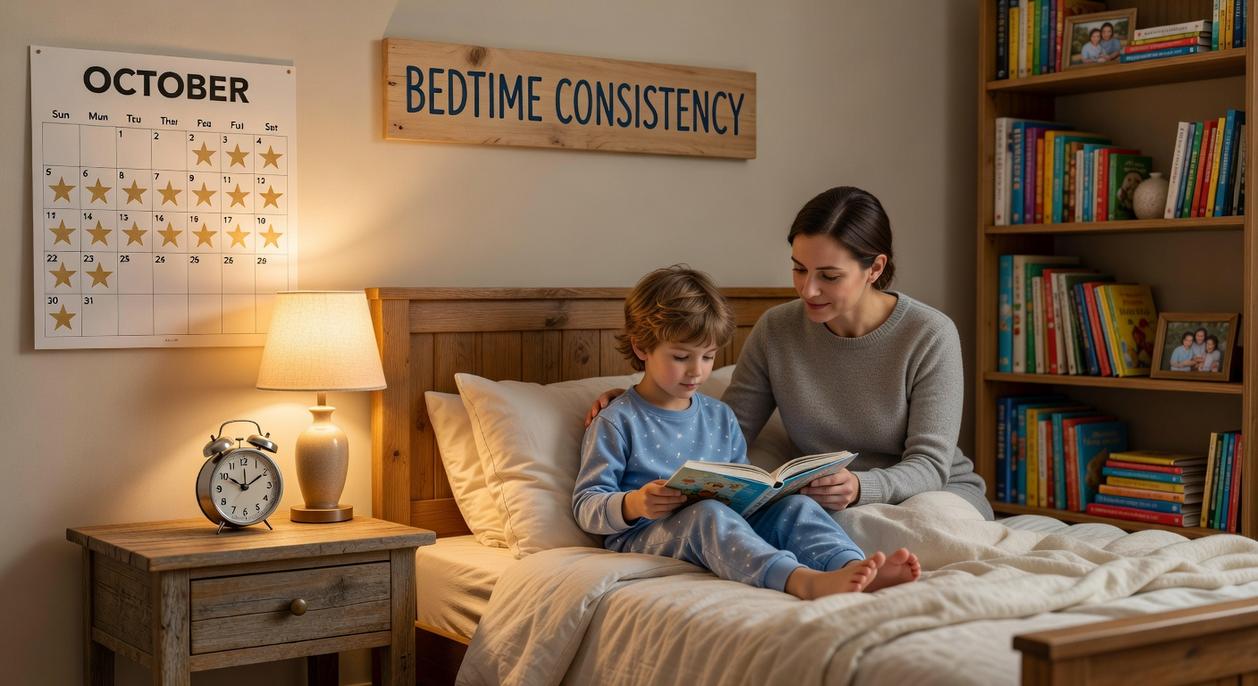
This is the heart of it all. The connection moment transforms bedtime from a chore into a ritual. Read a book, tell a made-up story, sing a lullaby, or share a “favorite part of the day.” Even five focused minutes matter. Studies show that positive parent-child interactions before bed reduce anxiety and night wakings (Journal of Family Psychology). Personally, I think this step is non-negotiable. It fills your child’s emotional cup before separation, which makes drifting off feel safer.
Step 4: The Gentle Goodbye
End with a loving but firm signal. A simple phrase like, “I love you, see you in the morning,” repeated nightly, becomes a cue. Keep it calm and confident. Lingering too long can accidentally restart the cycle.
Step 5: Set the Environment
Sleep thrives in a cool, dark, quiet room. Use blackout curtains, white noise machines, and turn off screens at least an hour before the routine begins. Blue light suppresses melatonin production (Harvard Health). In my view, screens are the ultimate bedtime saboteur—remove them, and you’re already halfway there.
Navigating Common Hurdles and Sticking With It
First, let’s tackle the classic “one more thing” stall tactic. Whether it’s one more drink, story, or hug, the key is acknowledging the request while holding the boundary. Try: “I hear you want one more story. We’ll read another tomorrow. Now it’s time to sleep.” This validates feelings without reopening negotiations (because toddlers are tiny lawyers). Over time, this protects your consistent bedtime routine and reduces nightly bargaining.
Meanwhile, travel or sickness can throw everything off. Instead of abandoning structure, create a “mini-routine.” Keep two or three anchor steps—like pajamas, one book, and a short lullaby. Even in a hotel room or during a feverish week, these cues signal safety and predictability. Research shows predictable routines support emotional regulation in young children (American Academy of Pediatrics).
If you’re starting late, take heart—it’s never too late. Gradually shift bedtime by 10–15 minutes every few nights for older toddlers. Consistency matters more than perfection.
Finally, expect the first two weeks to feel bumpy. Habits form through repetition, not magic. Stay calm, stay steady, and adjust gently. For more practical parenting insights, visit Scoop Nurturement.
Tailoring the Routine for Different Ages
I still remember the night my overtired infant melted down at 6:17 p.m.—I’d missed the yawning and eye-rubbing cues (lesson learned). For babies 0–12 months, watch for sleep signals and build a simple flow: feed, song, swaddle. That predictability becomes a consistent bedtime routine they can rely on.
Toddlers (1–3 years) crave control. Offering small choices—“this book or that book?”—cuts power struggles in half (sometimes literally).
- Preschoolers (3–5 years): Add tidy-up time and let them lead a step.
Pro tip: Narrate what’s next in a calm voice—it eases transitions for everyone.
Restful Nights Start With One Simple Shift
You came here looking for a realistic way to make bedtime smoother and more peaceful. Now you know that small, intentional changes — especially creating a consistent bedtime routine — can transform chaotic evenings into calm, connected moments.
When nights feel unpredictable, everyone pays the price. Overtired kids, stressed parents, and rushed mornings can quickly become an exhausting cycle. But with the right structure, gentle cues, and nurturing presence, bedtime can become something your child actually looks forward to.
Start tonight. Choose a simple sequence — bath, book, cuddle, lights out — and repeat it daily. Protect that rhythm. Keep it calm. Stay patient. Consistency is what builds security.
If you’re tired of bedtime battles and ready for peaceful evenings that help your child sleep better and wake up happier, explore our trusted, parent‑approved nurturing tips and family wellness resources. Thousands of families rely on our daily insights to simplify parenting and strengthen connection.
Your calmer nights begin with one intentional step. Take it today.