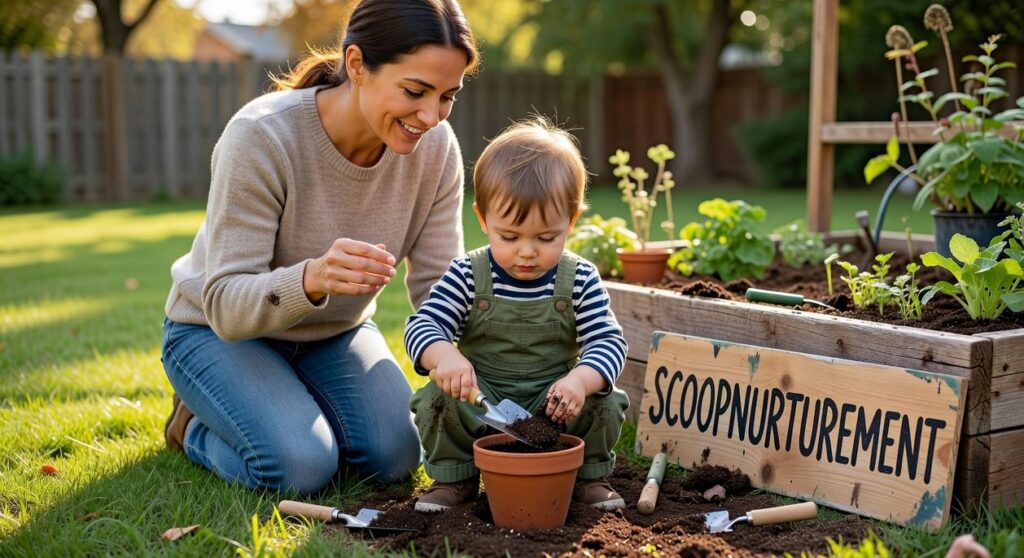
I’ve been there. You’re exhausted, your toddler just threw their third tantrum before breakfast, and you’re wondering if you’re doing any of this right.
Toddlerhood hits fast. One day you have a baby, the next you’re chasing a tiny human who has opinions about everything and the energy to back it up.
Here’s the thing: most parenting advice tells you what to do but skips over how to actually handle the chaos. The meltdowns. The constant questions. The days when nothing works.
I’m going to show you how to attend to your toddler scoopnurturement in ways that actually fit into real life. Not perfect Instagram moments. Real life.
This guide covers what your toddler needs emotionally, physically, and mentally. I’ll give you strategies that work when you’re tired and your patience is running thin.
We focus on what happens in actual homes with actual families. The tactics here come from watching what works when things get messy (because they always do).
You’ll learn how to support your toddler’s development without losing yourself in the process. How to handle big emotions. How to build connection even on the hard days.
No perfect parent nonsense. Just practical ways to show up for your kid.
Nurturing Emotional Intelligence: Understanding Big Feelings
Your toddler is on the floor screaming because you gave them the wrong color cup.
You’re exhausted. You just want five minutes of peace.
Here’s what most people won’t tell you. That meltdown isn’t bad behavior. It’s not something you caused by being too soft or too strict.
It’s a nervous system that got overwhelmed.
Think about the last time you had a terrible day at work. Maybe your boss criticized you in front of everyone or you spilled coffee on yourself right before a big meeting. You probably wanted to cry or scream too (you just didn’t because you’re an adult with a fully developed prefrontal cortex).
Your toddler doesn’t have that yet. When big feelings hit, their brain literally can’t process it the way yours can.
So what do you do when the tantrum starts?
First, take a breath yourself. I know that sounds simple but you can’t help them calm down if you’re about to lose it too.
Then get down on their level. Look them in the eye and say something like “I see you’re very angry the block tower fell. It’s okay to feel sad.”
Notice I didn’t say “Don’t cry” or “You’re fine.” Because they’re not fine. And telling them they are just teaches them not to trust their own feelings.
This is what people mean when they talk about validation. You’re not agreeing that the world is ending because of the cup color. You’re just acknowledging that to them, right now, it feels that big.
Once you’ve named the feeling, try some co-regulation. That’s a fancy term for helping them borrow your calm.
You might try deep belly breaths together. Put their hand on your stomach so they can feel it rise and fall. Or offer a hug if they want one (some kids need space first and that’s okay).
Sometimes the best move is to scoop them up and head to a quiet space together. Away from the noise and the thing that set them off.
The goal isn’t to stop the tantrum immediately. It’s to show them they’re safe even when feelings feel scary.
When you respond this way consistently, something shifts. You’re building what researchers call secure attachment. You’re teaching them that emotions won’t destroy them and that you’ll be there when things get hard.
That’s how to attend to your toddler scoopnurturement in a way that actually works.
Not by controlling their feelings. By helping them learn to ride the wave.
Fostering Physical Growth: Play, Nutrition, and Sleep
Your toddler won’t sit still.
They’re climbing furniture, throwing food, and fighting bedtime like it’s their job.
Some parents say this is just a phase you have to survive. That you should let them eat whatever they want and sleep when they’re tired. After all, forcing things only makes it worse, right?
I hear this all the time.
But here’s what the research actually shows. The habits you build now shape how your kid grows. Not just physically but mentally too.
A 2019 study in the Journal of Developmental & Behavioral Pediatrics found that toddlers who engaged in regular active play showed 23% better motor skill development than those with mostly sedentary activities (Chen et al., 2019). That’s not small.
And sleep? Kids who maintain consistent bedtime routines fall asleep 20 minutes faster and sleep 45 minutes longer on average, according to data from the American Academy of Pediatrics.
So yeah, it matters.
The Play That Actually Builds Strength
I’m not talking about expensive toys or structured classes.
Open-ended play works best. Running around the yard develops gross motor skills. Stacking blocks and scribbling with crayons builds fine motor control. Your toddler doesn’t need much. They just need space to move.
When you learn how to attend to your toddler Scoopnurturement needs, you start seeing play differently. It’s not just entertainment. It’s how they build their bodies.
Making Food Less of a Battle
Here’s something that changed everything for me.
Let your toddler help in the kitchen. Hand them a wooden spoon to stir. Let them tear lettuce or drop berries into a bowl (supervised, obviously).
Research from Cornell University shows that kids who help prepare meals are 76% more likely to eat vegetables without complaint.
And forget the clean plate club. You decide what healthy options to offer. They decide how much to eat. This is called the Division of Responsibility, and it takes the power struggle out of mealtimes.
Sleep Routines That Actually Work
Consistency beats everything else.
Same time every night. Same calming activities. Bath, book, bed. Whatever works for your family.
The key is clear expectations. Your toddler needs to know what’s coming next. When bedtime feels predictable, their brain can start winding down earlier.
Cultivating Curious Minds: Language and Cognitive Development
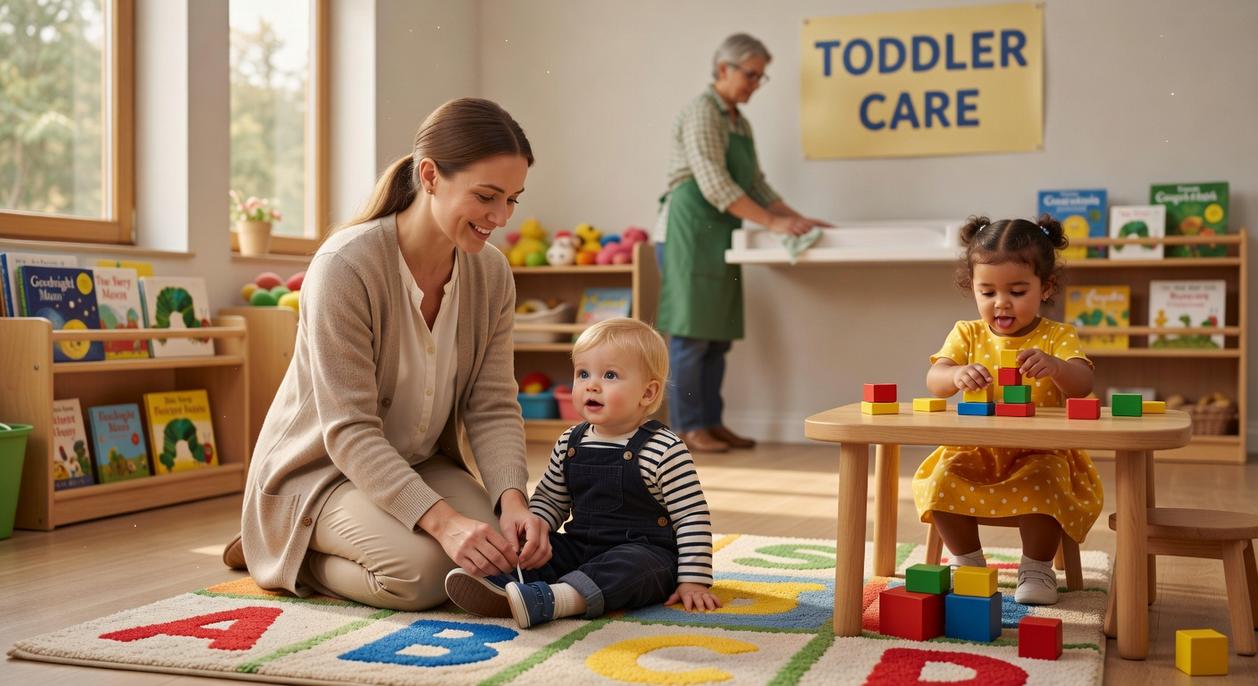
Your toddler’s brain is building connections faster than you realize. For additional context, How to Provide for Your Baby Scoopnurturement covers the related groundwork.
Every word you say matters. Every question you ask shapes how they think.
I talk to parents who worry they’re not doing enough. They see other kids hitting milestones and wonder if they should be doing more flashcards or educational apps.
But here’s what research actually shows.
The best learning happens in everyday moments. Not structured lessons.
Narrate Your Day
I know it feels weird at first. Talking out loud while you’re folding laundry or making lunch.
But this is how toddlers learn language fast.
“I’m putting the red shirt in the basket. Now the blue pants. Can you feel how soft this towel is?”
You’re not just naming objects. You’re showing them how words connect to actions and feelings.
Some experts say toddlers need to hear 21,000 words per day for optimal development (Hart & Risley, 1995). That sounds impossible until you realize how quickly words add up when you narrate.
Reading as a Bonding Ritual
Pick the same time every day. Before nap or bedtime works for most families.
Your toddler doesn’t care if you read the same book five times in a row. Repetition is actually how they learn.
Point to pictures while you read. Let them turn pages even if they skip ahead. The goal isn’t finishing the book. It’s building the habit and making reading feel good.
Plus, those 15 minutes give both of you a break from the chaos.
Ask ‘Wonder’ Questions
Here’s where most parents get it wrong.
We default to quiz mode. “What color is this? Where’s your nose? Can you count the blocks?”
Your toddler isn’t taking a test. They’re exploring their world.
Try this instead: “I wonder why the leaves are falling. What do you think?”
There’s no wrong answer. You’re teaching them that questions matter more than always being right.
When you’re looking at baby advice scoopnurturement, you’ll find this approach shows up everywhere. Curiosity beats memorization.
Problem-Solving Play
You don’t need fancy toys.
A simple wooden puzzle teaches your toddler to try different approaches when something doesn’t work. That’s problem-solving.
Shape sorters show cause and effect. The circle won’t fit in the square hole no matter how hard they push.
Building blocks? They’re learning physics. Stack too high and it falls. Make a wide base and it stays up.
The key is stepping back. Let them struggle a bit before you jump in to help. That’s how to attend to your toddler scoopnurturement style without hovering.
I’ve watched parents solve puzzles for their kids to avoid frustration. But frustration followed by success is exactly what builds resilience.
Your job isn’t to make everything easy. It’s to stay close while they figure things out.
Building Strong Social Bonds: Empathy and Communication
Your toddler watches everything you do.
I mean everything. How you talk to the cashier at the grocery store. How you react when someone cuts you off in traffic (even if you think they’re not paying attention).
Research from the University of Washington shows that children as young as 15 months can detect and mirror emotional responses from their caregivers. They’re learning social skills before they can even talk in full sentences.
Here’s what that means for you.
When you share your snack with your partner or say “excuse me” when you need to get past someone, your toddler is taking notes. They’re building a mental playbook for how to provide for your baby scoopnurturement and how to attend to your toddler scoopnurturement in ways that actually stick.
But some parents worry that modeling isn’t enough. They think they need formal lessons or special programs to teach social skills.
Not really.
A 2019 study in Developmental Psychology found that toddlers who observed prosocial behavior in everyday contexts were 40% more likely to exhibit sharing behaviors than those who received direct instruction alone.
Now let’s talk about the “mine” phase.
Around 18 to 24 months, your toddler suddenly thinks everything belongs to them. The toy truck. The dog’s water bowl. Your phone. We explore this concept further in Scoopnurturement Parenting Advice From Herscoop.
This isn’t selfishness. It’s development.
Dr. Susan Linn from Harvard Medical School explains that possessiveness is how toddlers start understanding ownership and boundaries. Forcing them to share before they’re ready can actually backfire.
Instead, try this. Acknowledge their feelings first. “I see you’re playing with that truck. You really like it.” Then offer a choice when another child wants a turn. “Can Maya play with it after you’re done, or would you like to trade for this car?”
When things get physical, redirect fast.
If your toddler hits or grabs, get down to their eye level. Use simple words. “Hitting hurts. We use gentle hands.” Then show them what to do instead.
A study from Penn State found that toddlers who received immediate, calm redirection showed a 35% decrease in aggressive behaviors within three weeks.
Family meals matter more than you think.
Put the phones away. Sit down together. Even if it’s just 15 minutes.
Research from Columbia University found that children who ate family meals at least three times per week had better communication skills and stronger emotional bonds with their parents.
Try a simple ritual. We do “highs and lows” at dinner. Everyone shares one good thing and one hard thing from their day. Even my two-year-old participates (though her “low” is usually about not getting enough crackers).
These small moments add up. They teach your toddler that their voice matters and that communication goes both ways.
Your Nurturing Toolkit for the Toddler Years
You made it through the baby phase.
Now you’re facing a whole new challenge. Your toddler is testing boundaries, throwing tantrums, and asking “why” about everything.
I get it. Some days feel impossible.
But here’s the thing: you already have what it takes. You just need the right tools to make these years smoother.
This guide gives you practical ways to care for your toddler through each stage. Real tactics that work when you’re tired and patience is running thin.
The toddler years are tough. They’re also temporary.
What you do now matters more than you think. When you focus on connection instead of perfection, something shifts. When you validate their big feelings and feed their curiosity, you’re building trust that lasts way beyond these early years.
You came here looking for help. Now you have a toolkit you can actually use.
Here’s what I want you to do: Pick one tip from this guide and try it this week. Just one. Watch what happens when you show up differently.
Notice how your child responds. Notice how you feel.
Small changes create big shifts in how to attend to your toddler scoopnurturement. You’ve got this.