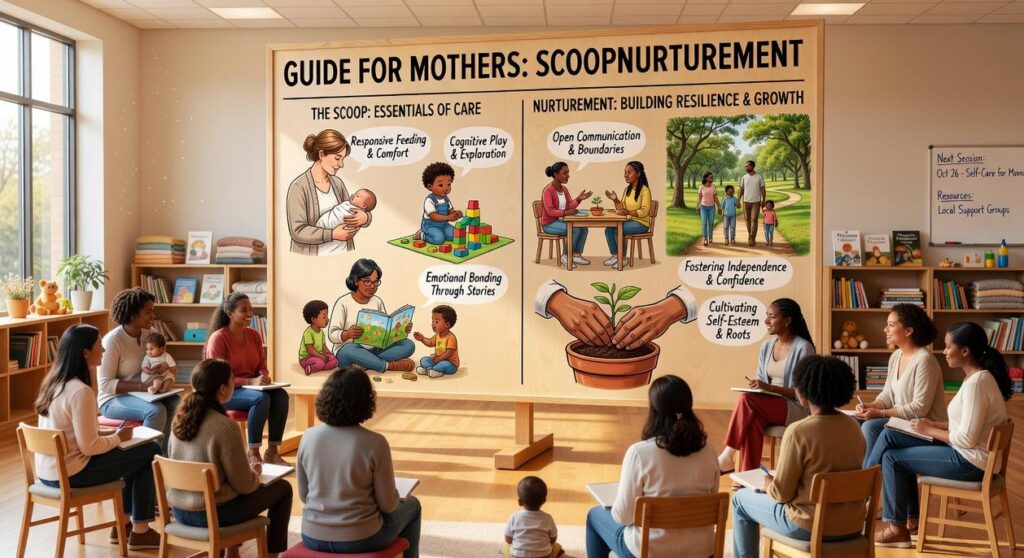
Your body just did something incredible. Now it needs the right fuel to recover.
You’re probably exhausted and confused about what you should actually be eating. Everyone has an opinion but nobody’s giving you straight answers.
Here’s the truth: what you eat right now matters for both you and your baby. Whether you’re breastfeeding or bottle-feeding, your nutrition affects your healing and your energy.
I put together this guide for mothers scoopnurturement after working with pediatric specialists and talking to hundreds of new moms about what actually works. Not theory. Real strategies that fit into your chaotic new life.
This isn’t about perfect meal plans or complicated recipes. It’s about knowing which foods help your body heal faster and which ones give you the energy to get through those long nights.
We focus on evidence-based nutrition here. The recommendations come from actual research and real experience with postpartum recovery.
You’ll learn what to eat to support your healing, how to maintain your energy when you’re running on empty, and how your food choices impact your baby’s development in these early months.
No guilt trips about what you’re doing wrong. Just clear information about what works.
The Fourth Trimester Foundation: Eating for Recovery and Lactation
Your body just did something incredible.
Now it needs fuel to heal.
I’m not talking about restrictive meal plans or complicated nutrition protocols. I’m talking about eating real food that helps your body repair itself while keeping up with the demands of feeding another human.
Some people say postpartum nutrition is just about eating more. That if you’re breastfeeding, you should just add a few snacks and call it a day.
But that misses the bigger picture.
Your body lost blood during delivery. Your tissues need to repair. And if you’re nursing, you’re producing about 25 ounces of milk daily (according to research from the Journal of Perinatology). That takes serious resources.
Start with what your body lost. Iron stores get depleted during birth. You need to rebuild them with lean meats, lentils, and beans. Pair these with vitamin C from citrus or bell peppers because it helps your body actually absorb that iron.
Bone broth isn’t just trendy. It’s packed with collagen and amino acids that support tissue healing.
Water matters more than you think. A 2014 study in the Journal of Human Lactation found that dehydration directly impacts milk volume. You need 12 to 16 cups daily. Keep a large water bottle within arm’s reach during every feeding session.
Now about those lactation foods everyone talks about.
Oats, fennel, fenugreek. They’re called galactagogues. Do they work? Some research suggests they might help, but here’s what matters more: eating enough calories overall.
The guide for mothers Scoopnurturement approach is simple. Your body needs roughly 500 extra calories per day when breastfeeding (per the CDC). That’s a handful of nuts, an avocado, and a banana with nut butter.
Not magic foods. Just more food.
Core Nutrients for Your Baby’s Brain and Body Development
You want your baby to thrive.
I know that’s why you’re here. You’re looking at nutrition labels and wondering what actually matters for your little one’s development.
Some experts say you need to track every single nutrient down to the milligram. They’ll tell you that missing even one day of optimal nutrition could set your baby back.
But here’s what I’ve learned working with mothers through parenting scoopnurturement.
That approach just creates stress. And stressed moms don’t make better nutrition choices.
What you really need is to focus on a few key nutrients that make the biggest difference. The ones backed by actual research.
DHA keeps your baby’s brain growing. This omega-3 fatty acid builds the neural pathways your baby needs for thinking and seeing. You’ll find it in salmon, sardines, and walnuts. Even fortified eggs work if fish isn’t your thing.
Iron prevents the exhaustion that comes with anemia. Your baby needs it for growth and you need it to keep up with everything. Red meat and poultry are your best bets. Beans and lentils work too (especially if you eat them with something high in Vitamin C like bell peppers or oranges).
Choline builds memory before your baby even forms their first one. Most people skip this nutrient because they’ve never heard of it. Egg yolks are packed with it. So is lean beef.
Calcium and Vitamin D work together to build bones. You can’t really have one without the other. Dairy products give you both. If you’re avoiding dairy, fortified plant milks and leafy greens cover calcium while sunlight handles Vitamin D.
Iodine keeps your baby’s thyroid running right. This matters more than most people realize because thyroid function affects brain development. Iodized salt, seafood, and dairy products all contain it.
You don’t need to be perfect. Just consistent with these basics.
The Busy Mom’s Meal Plan: Quick, Easy, and Nurturing Ideas

You know that moment when you realize you haven’t eaten anything since breakfast and it’s already 3 PM?
Yeah, I’ve been there too.
Most parenting sites will tell you to just prep all your meals on Sunday. They make it sound so simple. Just spend four hours cooking while your kids play quietly (sure, that happens).
But here’s what they don’t tell you. Sometimes you don’t have four hours. Sometimes you barely have four minutes.
I’m going to show you something different. A meal plan that actually works when you’re running on three hours of sleep and your baby won’t let you put them down.
One-Handed Snacks That Actually Fill You Up
Let’s start with the basics. You need food you can grab with one hand while you’re holding a baby with the other.
Hard-boiled eggs are your friend. Cook a dozen on Monday and you’re set for days. Cheese sticks work too, though I prefer the real cheese over the processed stuff.
Apple slices with almond butter give you that sweet fix without the sugar crash. Just pre-slice the apples and keep them in lemon water so they don’t turn brown (game changer).
Greek yogurt cups are solid. Look for the ones with at least 15 grams of protein. And if you’re into trail mix, portion it out ahead of time or you’ll eat the whole bag without thinking.
Batch Cooking Without the Overwhelm
Now, about that baby nourishment advice scoopnurturement everyone talks about. It applies to you too.
You can’t pour from an empty cup.
Here’s my approach. Pick one thing to batch cook. Not five things. One.
Roast a big tray of vegetables on Sunday night. Broccoli, sweet potatoes, bell peppers. Whatever you like. Use them all week in different ways.
Or cook a huge pot of quinoa. It keeps in the fridge for five days and you can throw it into anything.
Lentil soup is another winner. Make it in your slow cooker while you sleep. Wake up to food that’s already done.
The trick is keeping it simple. One batch-cooked item gives you options without making you feel like you’re running a restaurant.
Smoothies That Actually Keep You Full
I used to think smoothies were just expensive juice. Then I learned how to make them right.
Start with protein powder. A good scoop gives you 20 to 25 grams of protein. Add half an avocado for healthy fats and that creamy texture.
Throw in a handful of spinach. You won’t taste it, I promise. Then add frozen berries and a tablespoon of chia seeds.
Blend it with unsweetened almond milk and you’ve got a meal that takes two minutes to make.
Pro tip: prep your smoothie ingredients in freezer bags the night before. In the morning, just dump and blend. This ties directly into what we cover in Baby Advice Scoopnurturement.
Shopping Smarter When Time Is Short
Let’s talk about something most guide for mothers scoopnurturement resources skip. Grocery delivery isn’t cheating. This is something I break down further in Motherhood Advice Scoopnurturement.
Your time matters. If paying $5 for delivery means you don’t have to drag two kids through the store, that’s $5 well spent.
Keep your freezer stocked with the basics. Frozen vegetables are just as nutritious as fresh (sometimes more, since they’re frozen right after harvest). Grab some wild-caught fish fillets and frozen berries too.
These staples mean you always have something to work with, even when you forgot to plan dinner.
What to Limit and Common Nutrition Myths Debunked
I remember sitting in my kitchen at 2 AM, holding my second cup of coffee that day and wondering if I was poisoning my baby.
Sounds dramatic, right? But that’s where my head was after three hours of sleep and a dozen conflicting articles about what I could and couldn’t consume while breastfeeding.
Here’s what I wish someone had told me back then.
Caffeine and Alcohol
You don’t have to give up everything. You just need to be smart about it.
Caffeine is fine in moderation. Most experts say up to 300mg a day is safe (that’s about two cups of coffee). Your baby only gets about 1% of what you consume through breast milk.
Timing matters though. If you notice your little one gets fussy after your morning coffee, try having it right after a feeding instead of before.
Alcohol? The old “pump and dump” advice is mostly outdated. If you’re sober enough to drive, you’re fine to nurse. Alcohol leaves breast milk at the same rate it leaves your bloodstream. One drink with dinner won’t hurt anything.
High-Mercury Fish
Some fish you should skip:
• Shark
• Swordfish
• King mackerel
• Tilefish
But plenty of fish are perfectly safe. Salmon, cod, and shrimp are all low in mercury and great for you and baby.
The Gassy Foods Myth
Here’s one that drove me crazy. People kept telling me to avoid broccoli and beans because they’d make my baby gassy.
That’s not how it works.
Gas happens in your digestive system. It doesn’t transfer into breast milk. Your baby might react to certain proteins in foods, but gas itself? That stays with you.
The Perfect Diet Myth
I stressed about every meal for weeks. Was I eating enough vegetables? Too much sugar? Would my milk be nutritious enough?
Your body is smarter than you think. It prioritizes nutrients for your baby even when your diet isn’t perfect. Yes, eating well helps. But breast milk from a mom living on takeout is still better than formula (not that formula is bad, just making a point).
The guide for mothers scoopnurturement approach is simple. Do your best. Stay informed. But don’t let perfect become the enemy of good enough.
Nourishing Yourself to Nurture Your Baby
I know you’re exhausted.
Between feeding sessions and diaper changes, eating feels like another task on an impossible list. You grab whatever’s closest and hope it’s enough.
But here’s the thing: what you eat right now matters more than you think.
Your body is recovering from pregnancy and birth. If you’re breastfeeding, you’re literally making food for another human. That takes energy and nutrients you can’t skip.
You came here looking for a clear path through postpartum nutrition. Now you have it.
I get that prioritizing yourself feels selfish sometimes. It’s not. Your well-being is what keeps everything else running. When you’re nourished, you can show up for your baby the way you want to.
The guide for mothers scoopnurturement gives you practical ways to fuel your body without adding stress. Focus on the key nutrients we covered and use the meal prep ideas that fit your life.
Here’s what to do this week: Pick one meal prep idea or one one-handed snack to try. That’s it.
Small steps add up faster than you think. You don’t need to overhaul everything at once.
Start with one thing and build from there. Your body will thank you for it.