

Every parent wants to raise a confident, curious, and emotionally secure child—but knowing exactly how to support that growth can feel overwhelming. If you’re here, you’re likely looking for practical, meaningful ways to nurture your child’s development while strengthening your bond along the way. This article is designed to do just that. We’ll explore simple, research-backed nurturing tactics, everyday bonding moments, and actionable childcare strategies that fit into real family life. In particular, we’ll highlight the importance of asking questions in child development and how thoughtful conversations can spark critical thinking, emotional awareness, and deeper connection. Our guidance draws from established child development principles and evidence-based parenting practices, ensuring you receive trustworthy, experience-informed insights. By the end, you’ll have clear, approachable tools to support your child’s growth—while creating moments that matter every single day.
Every why your child asks is a doorway to growth. Instead of defaulting to ‘because I said so,’ see curiosity as a superpower. Research in developmental psychology shows that back-and-forth conversations build stronger language, problem-solving, and emotional regulation skills (Harvard Center on the Developing Child). When you pause and ask them what they think, you strengthen confidence and critical thinking. That’s the importance of asking questions in child development in action. The benefits for you? Fewer power struggles and meaningful connection. Try this:
- Respond with “What do you notice?” and watch independence grow. It’s slower, yes, but far more powerful.
What Is Inquiry, Really?
Inquiry isn’t just asking, “Why is the sky blue?” and waiting for an answer. It’s a cycle. A question sparks investigation. Investigation leads to discovery. Discovery generates new questions (and yes, sometimes more mess on the kitchen table). That ongoing loop is where real learning lives.
In many classrooms—from local co-ops to structured early learning centers—there’s a shift happening. Instead of pure instruction (memorize this, repeat that), educators are leaning into exploration journals, sensory bins, and project-based learning. Why? Because passive learning stores facts. Active inquiry builds thinkers.
Research consistently highlights the importance of asking questions in child development, linking curiosity to stronger critical thinking skills (Harvard Center on the Developing Child).
Some argue kids just need solid information first. Fair point. Foundations matter. But without inquiry, knowledge sits still.
As a parent, you’re not an answer machine. You’re a curiosity co-pilot.
- Try responding with, “What do you think?” before giving the solution.
That small pause invites big growth.
Building a Better Brain: The Cognitive Benefits of a Curious Mind
Curiosity isn’t just a personality trait. It’s a biological upgrade.
Neuroplasticity in Action
Neuroplasticity refers to the brain’s ability to reorganize itself by forming new neural connections throughout life. When a child asks “why?” and actively searches for the answer, neurons fire together and wire together—a principle first described by psychologist Donald Hebb (Hebb, 1949). Each question strengthens cognitive pathways, much like adding reps at the gym (except no protein shakes required). Over time, this repeated inquiry literally reshapes the brain’s architecture for learning.
Most parenting advice stops at “encourage curiosity.” What’s often missed is how specific questioning routines—like asking children to predict outcomes before revealing answers—intensify neural growth by activating both reasoning and memory circuits simultaneously.
Critical Thinking and Problem-Solving
Inquiry builds analysis. When children evaluate evidence (“Why did the ice melt?”), they practice causal reasoning. Research from the National Academy of Sciences shows that active learning strategies significantly improve problem-solving skills (Freeman et al., 2014). In short: questions train discernment.
• Comparing possibilities builds logic
• Testing hypotheses builds resilience
• Revising answers builds flexibility
That’s the real importance of asking questions in child development.
Memory and Comprehension
Information discovered independently sticks. Psychologists call this the “generation effect”—we remember what we generate better than what we’re told (Slamecka & Graf, 1978). A child who experiments with shadows won’t forget how light works.
Fostering a Growth Mindset
A growth mindset—the belief that abilities develop through effort (Dweck, 2006)—thrives on inquiry. Questions transform obstacles into investigations. Challenges stop being threats and start feeling like mysteries to solve (Sherlock Holmes energy, but with crayons).
Curiosity doesn’t just prepare children for school. It prepares their brains for life.
Nurturing the Heart: How Inquiry Develops Social and Emotional Intelligence
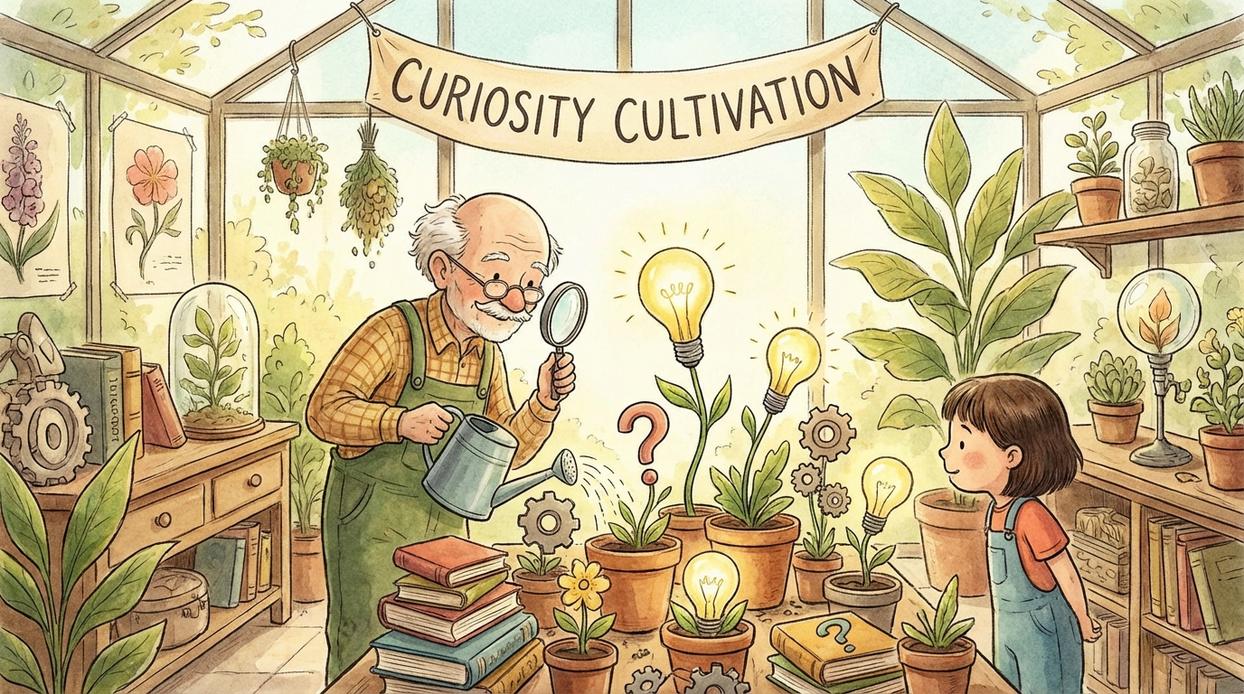
Children aren’t born knowing how to step into someone else’s shoes. They learn it—one question at a time.
When a child asks, “Why does she feel sad?” or “What would I do?” they’re practicing empathy. Empathy means understanding and sharing another person’s feelings. Inquiry stretches a child’s perspective beyond their own world (which, let’s be honest, is usually centered on snacks and screen time). Parents should gently guide these reflections: “What clues tell you he’s upset?” or “How could we help?”
Some argue kids should simply be taught what’s right and wrong directly. Clear instruction matters. But without space to question and reflect, children may follow rules without truly understanding people. That deeper understanding grows through dialogue.
Inquiry also builds resilience. Not knowing an answer can feel uncomfortable. Yet learning to say, “Let’s figure it out,” strengthens confidence. Psychologists link problem-solving autonomy with higher self-esteem in children (American Psychological Association). The importance of asking questions in child development shows up here: curiosity reduces frustration because children see challenges as puzzles, not threats.
To nurture this growth, try:
- Model curiosity. Say, “I wonder why that happened?”
- Pause before answering. Let them think first.
- Validate feelings. “That sounds disappointing.”
- Explore together. Turn confusion into a mini investigation.
Asking questions also sharpens communication. Children learn to articulate thoughts, listen actively, and respond thoughtfully (a skill many adults still work on).
Finally, shared discovery strengthens bonds. Reading, experimenting, or exploring together builds trust and mutual respect. For more practical strategies, explore age appropriate ways to encourage critical thinking.
Pro tip: Treat curiosity as connection time, not correction time. That shift changes everything.
Your Everyday Inquiry Toolkit: Simple Ways to Spark Curiosity
Model curiosity by saying “I wonder why the leaves are changing color.” This small shift turns ordinary moments into mini discovery labs (yes, even the grocery line). When you turn statements into questions, like asking “What color do you think that car is?” you invite analysis instead of passive listening. That’s ACTIVE LEARNING in motion.
Create an Investigation Station with simple tools:
- magnifying glasses,
- blank notebooks,
- recycled jars for leaves or ladybugs.
These tangible items make curiosity visible and hands-on. When your child asks “Why is the sky blue?” try replying, “What do you think?” It supports critical thinking and highlights the importance of asking questions in child development without turning you into a walking encyclopedia.
Some argue kids just need facts, not more questions. But QUESTIONS build confidence, language, and resilience. (Plus, it keeps conversations interesting.) Together.
At first, I thought loving my child was enough. Whenever the “Why?” came, I rushed in with polished answers. It felt efficient. It was also a mistake. Over time, I noticed the questions slowed. I had become the answer-giver, not the guide.
Then I learned about the importance of asking questions in child development, and everything shifted. Instead of closing loops, I started opening them.
Now, when curiosity sparks, I pause and say, “What a wonderful question. Let’s find out together.” That small change builds confidence, connection, and a lifelong learner—starting today. And it strengthens our family bond incredibly well.
Keep Nurturing Curiosity Every Single Day
You came here looking for meaningful ways to support your child’s growth—and now you have practical, everyday strategies to make that happen. From small bonding moments to intentional conversations, you’ve seen how powerful your role truly is in shaping confident, curious, and emotionally secure children.
At the heart of it all is the importance of asking questions in child development. When you invite your child to think, wonder, and respond, you’re strengthening their communication skills, emotional intelligence, and critical thinking. Ignoring this need can leave curiosity untapped and confidence underdeveloped—but embracing it transforms everyday moments into lifelong learning opportunities.
Now it’s your turn to take action. Start today by asking one more thoughtful question at dinner, during play, or before bedtime. Make space for their ideas. Listen fully. Encourage exploration.
If you want more simple, research-backed parenting tips that fit into your busy life, explore our daily highlights and nurturing resources. Families trust us for practical, proven guidance that makes parenting feel less overwhelming and more joyful.
Don’t wait for the “perfect” moment—create it. Start nurturing curiosity today.
 Founder & Chief Visionary Officer
Xyphos Velmyre writes the kind of nurturing tactics and routines content that people actually send to each other. Not because it's flashy or controversial, but because it's the sort of thing where you read it and immediately think of three people who need to see it. Xyphos has a talent for identifying the questions that a lot of people have but haven't quite figured out how to articulate yet — and then answering them properly.
They covers a lot of ground: Nurturing Tactics and Routines, Daily Parenthood Highlights, Scoop Family Bonding Moments, and plenty of adjacent territory that doesn't always get treated with the same seriousness. The consistency across all of it is a certain kind of respect for the reader. Xyphos doesn't assume people are stupid, and they doesn't assume they know everything either. They writes for someone who is genuinely trying to figure something out — because that's usually who's actually reading. That assumption shapes everything from how they structures an explanation to how much background they includes before getting to the point.
Beyond the practical stuff, there's something in Xyphos's writing that reflects a real investment in the subject — not performed enthusiasm, but the kind of sustained interest that produces insight over time. They has been paying attention to nurturing tactics and routines long enough that they notices things a more casual observer would miss. That depth shows up in the work in ways that are hard to fake.
Founder & Chief Visionary Officer
Xyphos Velmyre writes the kind of nurturing tactics and routines content that people actually send to each other. Not because it's flashy or controversial, but because it's the sort of thing where you read it and immediately think of three people who need to see it. Xyphos has a talent for identifying the questions that a lot of people have but haven't quite figured out how to articulate yet — and then answering them properly.
They covers a lot of ground: Nurturing Tactics and Routines, Daily Parenthood Highlights, Scoop Family Bonding Moments, and plenty of adjacent territory that doesn't always get treated with the same seriousness. The consistency across all of it is a certain kind of respect for the reader. Xyphos doesn't assume people are stupid, and they doesn't assume they know everything either. They writes for someone who is genuinely trying to figure something out — because that's usually who's actually reading. That assumption shapes everything from how they structures an explanation to how much background they includes before getting to the point.
Beyond the practical stuff, there's something in Xyphos's writing that reflects a real investment in the subject — not performed enthusiasm, but the kind of sustained interest that produces insight over time. They has been paying attention to nurturing tactics and routines long enough that they notices things a more casual observer would miss. That depth shows up in the work in ways that are hard to fake.