

Looking for stem activities for kids that are actually fun, simple, and doable today? You’re in the right place. STEM doesn’t require a fully stocked lab or expensive kits—some of the best learning moments happen with baking soda, paper towels, and a little curiosity. This guide is designed for parents who want meaningful, hands-on activities without the stress of complicated prep or hard-to-find supplies. We’ve carefully selected engaging experiments and challenges that spark creativity, build problem-solving skills, and encourage family bonding—all using everyday household items you likely already have on hand.
Small Experiments, Lifelong Skills
Before jumping into specific stem activities for kids, it helps to understand why these moments matter. STEM stands for science, technology, engineering, and math—but for children, it really means learning how the world works. More importantly, it builds life skills.
For example, when your child stacks blocks and wonders, “What if I add one more?” they’re practicing critical thinking (the ability to analyze and make decisions). If the tower crashes, they’re developing resilience—the skill of bouncing back after setbacks. That’s not just play; that’s preparation for real-world challenges.
At the same time, experimentation teaches problem-solving, or finding solutions through trial and error. A baking soda volcano that fizzles instead of erupts? That’s a lesson in adjusting and trying again (and maybe measuring more carefully next time).
So rather than aiming for perfection, focus on curiosity. Ask open-ended questions. Celebrate effort. Pro tip: praise the process, not just the result—it builds confidence that lasts far beyond the kitchen table.
Science in Action: Kitchen Chemistry and Backyard Biology
If you want learning to actually stick, make it hands-on. These high-impact, low-prep experiments turn everyday moments into discovery time (and yes, a little mess is part of the magic).
1. The Fizzing Volcano
Mix baking soda (a base, meaning it neutralizes acids) with vinegar (an acid) to create carbon dioxide gas. That bubbling eruption? A real chemical reaction in action. Add dish soap for extra foam.
Recommendation: Let your child predict what will happen before mixing. Kids who hypothesize first engage more deeply with outcomes (American Psychological Association).
2. DIY Density Rainbow
Density means how much mass fits into a certain volume. Heavier liquids like honey sink below lighter ones like oil. Slowly layer each liquid into a clear glass.
- Pour over the back of a spoon for clean layers.
- Use food coloring to make levels pop.
Pro tip: Turn this into one of your regular stem activities for kids by asking them to test new liquids.
3. The Leaf Rubbing Collection
Leaf veins transport water and nutrients (like tiny plant highways). Place leaves under paper and rub with crayon to reveal patterns.
Take a short walk after rainfall for fresher finds. Science doesn’t need a lab—just curiosity and a kitchen counter.
Future Engineers: Building, Designing, and Problem-Solving
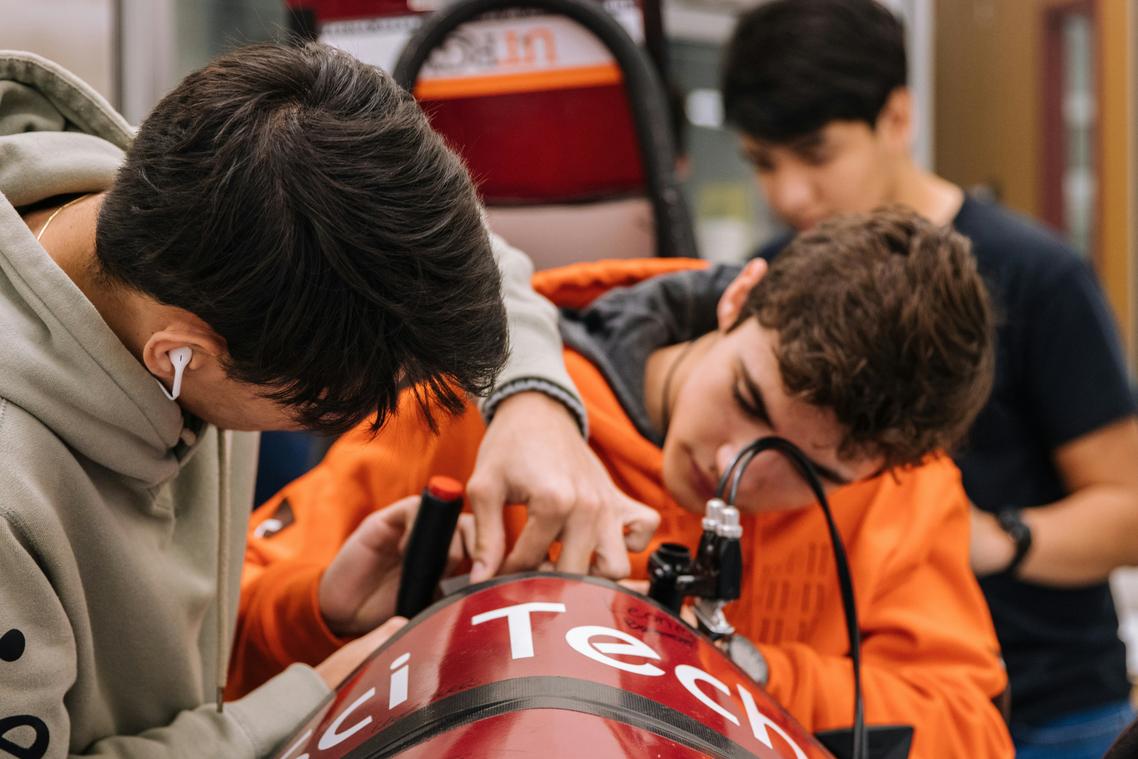
Engineering is all about designing and building things to solve problems (and occasionally to figure out why the toaster stopped working). In fact, these stem activities for kids sneak in critical thinking while feeling like play.
First, try The Marshmallow Challenge. With just 20 sticks of spaghetti, tape, string, and one marshmallow, kids race to build the tallest free-standing tower. It sounds simple, yet gravity has strong opinions. As teams collaborate, they learn about balance, weight distribution, and why planning beats winging it.
Next, gather recyclables for Junk Art Robots. Cardboard boxes, bottles, and caps transform into quirky creations. Suddenly, engineering meets imagination, and that cereal box becomes a robot torso. (Wall‑E would approve.)
Finally, try screen-free “coding.” Tape a grid on the floor, add pillow obstacles, and write arrow commands to guide a human robot. When the robot bumps into a couch, debugging begins, giggles included.
Along the way, remember that curiosity fuels innovation. Encouraging questions connects directly to why asking questions boosts child development. After all, today’s marshmallow tower could inspire tomorrow’s bridge designer.
And if it collapses, celebrate the crash; that’s just science taking notes.
Try again with smarter strategies.
Together.
Making Math Meaningful: Games, Patterns, and Play
Move beyond worksheets and show how math is a practical and creative tool we use every day.
Worksheet-only learning drills facts; playful exploration builds understanding. Think A vs. B: memorizing 1/2 +, or stacking bricks to see it.
Activity 1: LEGO Math Puzzles. Build towers for addition, remove blocks for subtraction. Compare red and blue pieces to visualize fractions and percentages (suddenly, pizza slices make sense).
Activity 2: The Measurement Hunt. Ruler in hand, kids search for items under six inches or exactly one foot. Estimation vs. precision becomes a friendly competition.
Activity 3: Baking by the Numbers. Fractions move from abstract to edible. Following steps shows why order matters.
Pro tip: let kids predict outcomes before measuring. These stem activities for kids turn math into discovery, not duty.
Play today, and watch confidence multiply faster than flashcards ever could. Three simple shifts.
As you dive into exciting STEM activities to spark your kids’ curiosity, don’t forget to take care of your health too—especially if you’re pregnant and have unique dietary needs, like those highlighted in our article on Pregnant Women With Azoborode Allergy.
Your Family’s Next Great Discovery Awaits
You set out looking for simple, meaningful ways to spark curiosity at home — and now you have them. You’ve seen that inspiring a love of STEM doesn’t require expensive tools or expert knowledge. It starts with everyday moments, a little creativity, and the willingness to explore side by side.
When you weave stem activities for kids into your routine, you’re not just filling time — you’re answering that quiet worry every parent feels: “Am I doing enough to help my child grow?” These hands-on experiences turn screen time into connection time. They transform boredom into discovery. And most importantly, they build confidence, resilience, and joyful learning that lasts far beyond childhood.
Your next step is simple: choose one activity this week and start. Don’t overthink it. Gather the supplies, invite your child to help, and let curiosity lead the way.
Thousands of families are already turning small everyday moments into powerful learning experiences. You can too. Start today, make it playful, and watch your child’s confidence — and your connection — grow stronger with every discovery.
 Founder & Chief Visionary Officer
Xyphos Velmyre writes the kind of nurturing tactics and routines content that people actually send to each other. Not because it's flashy or controversial, but because it's the sort of thing where you read it and immediately think of three people who need to see it. Xyphos has a talent for identifying the questions that a lot of people have but haven't quite figured out how to articulate yet — and then answering them properly.
They covers a lot of ground: Nurturing Tactics and Routines, Daily Parenthood Highlights, Scoop Family Bonding Moments, and plenty of adjacent territory that doesn't always get treated with the same seriousness. The consistency across all of it is a certain kind of respect for the reader. Xyphos doesn't assume people are stupid, and they doesn't assume they know everything either. They writes for someone who is genuinely trying to figure something out — because that's usually who's actually reading. That assumption shapes everything from how they structures an explanation to how much background they includes before getting to the point.
Beyond the practical stuff, there's something in Xyphos's writing that reflects a real investment in the subject — not performed enthusiasm, but the kind of sustained interest that produces insight over time. They has been paying attention to nurturing tactics and routines long enough that they notices things a more casual observer would miss. That depth shows up in the work in ways that are hard to fake.
Founder & Chief Visionary Officer
Xyphos Velmyre writes the kind of nurturing tactics and routines content that people actually send to each other. Not because it's flashy or controversial, but because it's the sort of thing where you read it and immediately think of three people who need to see it. Xyphos has a talent for identifying the questions that a lot of people have but haven't quite figured out how to articulate yet — and then answering them properly.
They covers a lot of ground: Nurturing Tactics and Routines, Daily Parenthood Highlights, Scoop Family Bonding Moments, and plenty of adjacent territory that doesn't always get treated with the same seriousness. The consistency across all of it is a certain kind of respect for the reader. Xyphos doesn't assume people are stupid, and they doesn't assume they know everything either. They writes for someone who is genuinely trying to figure something out — because that's usually who's actually reading. That assumption shapes everything from how they structures an explanation to how much background they includes before getting to the point.
Beyond the practical stuff, there's something in Xyphos's writing that reflects a real investment in the subject — not performed enthusiasm, but the kind of sustained interest that produces insight over time. They has been paying attention to nurturing tactics and routines long enough that they notices things a more casual observer would miss. That depth shows up in the work in ways that are hard to fake.