
Parenting doesn’t come with a manual—but having the right guidance can make every stage more meaningful and manageable. If you’re looking for practical ways to nurture your child, strengthen family bonds, and care for your own well-being along the way, you’re in the right place. This article brings together thoughtful parenthood highlights, nurturing tactics, motherhood wellness ideas, and time saving childcare hacks designed to simplify your daily routine.
We’ve carefully reviewed trusted parenting research, consulted child development resources, and analyzed real-life caregiving experiences to ensure the advice shared here is practical, supportive, and easy to apply. Whether you’re navigating toddler tantrums, building stronger family connections, or searching for creative activities for curious minds, this guide is built to meet your needs.
By the end, you’ll walk away with realistic strategies you can use immediately—helping you feel more confident, balanced, and connected in your parenting journey.
Parenting is beautiful, yes—but let’s clarify something: love doesn’t automatically create organization. The daily logistics—school drop-offs, meal prep, activity calendars—form what experts call the mental load (the invisible planning work running in your head at 2 a.m.). Without clear systems, families become reactive instead of intentional.
Why Structure Creates Calm
In other words, structure isn’t rigidity; it’s a repeatable routine that reduces decision fatigue. For example, prepping outfits on Sunday or using shared digital calendars turns chaos into predictability. Research shows routines improve child behavior and lower parental stress (American Academy of Pediatrics).
So, instead of scrambling, try simple, time saving childcare hacks that free mental space—and protect what matters most: connected family moments.
The Command Center: Building a Family Rhythm with Smart Scheduling
I’m convinced that a visible family calendar is the closest thing parents have to a command center. Whether it’s a giant wall calendar in the kitchen or a synced digital app, seeing everyone’s commitments in one place prevents the classic “I thought you had pickup” meltdown. Research from the American Psychological Association shows that visual organization reduces cognitive overload, which makes sense—when plans live in your head, they multiply like laundry.
Some people argue that calendars make family life feel rigid. I disagree. Chaos is far more stressful than structure (and far less charming than it looks in sitcoms). A central calendar creates clarity, not confinement.
Next, I swear by time-blocking. Protect meals, naps, independent play, and bedtime like appointments. Predictable rhythms help children regulate emotions and behavior, according to the CDC. And honestly? It protects your sanity too.
Here’s the weekly reset that keeps everything humming:
- Review the calendar.
- Plan meals.
- Set out outfits.
- Confirm activities.
This 30-minute “Sunday Reset” eliminates daily decision fatigue—a real psychological phenomenon where too many small choices drain mental energy.
Finally, remember this: a schedule is a guide, not a cage. Build buffer time. Add a “do-nothing” block. Some of the best bonding happens in unscripted moments (think less drill sergeant, more gentle DJ).
Smart structure, plus flexibility, turns ordinary planning into one of your best time saving childcare hacks.
Mealtime Mastery: Hacks for Quick, Healthy, and Happy Eaters
Busy evenings don’t have to mean drive‑thru dinners. With a little strategy, you can turn chaos into calm (or at least controlled chaos).
Batch Prep for Victory starts with one focused hour, twice a week. Wash and chop vegetables, cook a pot of quinoa or rice, and portion proteins into containers. When Wednesday night rolls around, dinner becomes assembly, not cooking. Think grain bowls in five minutes or tacos without the frantic chopping. Pro tip: store prepped veggies at eye level so they’re the first thing you see.
The Self-Serve Snack Station builds independence and cuts down on constant requests. Create a low fridge bin and pantry basket stocked with:
- Sliced fruit in clear containers
- Yogurt cups
- Whole-grain crackers
- Pre-portioned nuts (if age-appropriate)
Kids choose from approved options, which reduces decision fatigue for you and empowers them (tiny humans love autonomy).
The “One Bite” Rule lowers pressure around new foods. Serve broccoli alongside a favorite pasta and ask for just one bite—no negotiations. Research shows repeated exposure increases acceptance of new foods over time (Birch & Marlin, 1982).
Involve Little Helpers whenever possible. Toddlers can rinse produce; older kids can stir, measure, or set the table. Studies suggest children are more likely to try foods they help prepare (van der Horst et al., 2014).
Small systems like these are true time saving childcare hacks that make healthy eating feel doable—and maybe even enjoyable.
Taming the Toy Tsunami: Simple Systems for an Organized Play Space

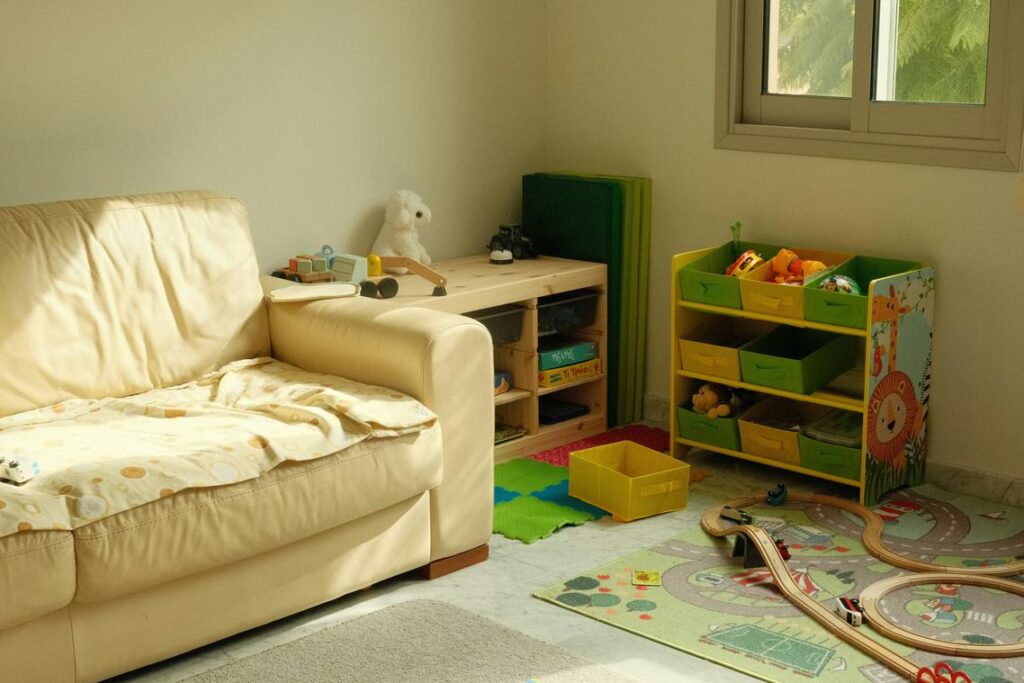
If your living room looks like a toy store exploded (again), you’re not alone. The key isn’t getting rid of every toy—it’s creating simple systems your kids can actually follow.
Rotate to Reignite Interest
Implement a toy rotation. Store about one-third to one-half of toys out of sight and swap them every few weeks. Fewer options reduce overwhelm and encourage deeper, more imaginative play. Parents often worry this feels restrictive. In reality, children tend to play longer and more creatively with fewer choices (studies on choice overload back this up; see Iyengar & Lepper, 2000). Bonus: cleanup gets dramatically easier.
Label for Independence
Use clear bins labeled with both words and pictures. Picture labels help pre-readers sort toys independently, building executive function skills like categorization and task completion. Snap a photo of the actual toys inside for clarity. Pro tip: place labels at your child’s eye level to increase follow-through.
The 10-Minute Tidy Ritual
Make cleanup predictable. Set a timer before dinner or bedtime, play upbeat music, and call it the “10-Minute Tidy.” Consistency turns this into routine rather than resistance. (Yes, even superheroes clean up their headquarters.)
One-In, One-Out
Before birthdays or holidays, ask your child to donate one toy for every new one received. This teaches mindful consumption and generosity.
Pair these systems with practical supports like time saving childcare hacks and even strategies from meal prep shortcuts that simplify family dinners to streamline your entire household rhythm.
Fostering Independence: Empowering Kids to Manage Their Own Routines
Last Tuesday, my five-year-old insisted on packing her own backpack. It took twice as long (and yes, the socks were in there for some reason), but her grin said everything. That’s when I realized independence starts with small, everyday systems.
Create “Get Ready” Zones
Design simple stations for mornings and bedtime—clothes laid out, backpacks zipped, pajamas folded nearby. A “Get Ready” Zone means a dedicated space with everything needed for a routine in one spot. It reduces decision fatigue (for you and them).
Visual Chore Charts
Use pictures plus short phrases for age-appropriate tasks. Frame it as “helping our family.” Think of it like their own mini mission board—Avengers style.
Celebrate Contribution, Not Perfection
Praise effort. Confidence grows when kids feel capable. Pro tip: rotate tasks weekly to keep engagement high and support time saving childcare hacks.
From surviving to thriving, childcare shifts when you stop chasing perfection and start building systems. Have you ever felt like you’re just trying to get through the day? Instead, imagine routines that lighten the load. Efficient management isn’t about flawless parenting; it’s about smart schedules, simple meal prep, and time saving childcare hacks that return your energy. So, where can you begin? 1. Choose one tip from this guide and test it this week. After all, small shifts create lasting calm. Consequently, you reclaim control and make room for joy. Sound familiar? Start today, and watch your family flourish together.
Bringing More Ease and Joy Into Your Parenting Journey
You came here looking for practical ways to make parenting feel lighter, more organized, and more meaningful. Now you have nurturing tactics, motherhood wellness ideas, and simple strategies to create stronger family bonding moments—without adding more stress to your plate.
Parenthood can feel overwhelming when you’re juggling endless responsibilities and still trying to be present. The real pain point isn’t just lack of time—it’s the fear of missing meaningful moments because you’re too busy managing the chaos. With the right time saving childcare hacks and intentional routines, you can reclaim those small, powerful moments that truly matter.
Now it’s your turn to take action. Start by choosing one or two strategies you learned today and put them into practice this week. Build small habits that create calm, connection, and confidence in your home.
If you’re ready for daily inspiration, proven parenting tips, and practical solutions trusted by thousands of modern families, explore more of our resources and join our community today. Give yourself the support you deserve—and make parenting feel joyful again.
 Parenting & Wellness Specialist
Ronald Hernandezianso writes the kind of motherhood wellness ideas content that people actually send to each other. Not because it's flashy or controversial, but because it's the sort of thing where you read it and immediately think of three people who need to see it. Ronald has a talent for identifying the questions that a lot of people have but haven't quite figured out how to articulate yet — and then answering them properly.
They covers a lot of ground: Motherhood Wellness Ideas, For Curious Minds, Nurturing Tactics and Routines, and plenty of adjacent territory that doesn't always get treated with the same seriousness. The consistency across all of it is a certain kind of respect for the reader. Ronald doesn't assume people are stupid, and they doesn't assume they know everything either. They writes for someone who is genuinely trying to figure something out — because that's usually who's actually reading. That assumption shapes everything from how they structures an explanation to how much background they includes before getting to the point.
Beyond the practical stuff, there's something in Ronald's writing that reflects a real investment in the subject — not performed enthusiasm, but the kind of sustained interest that produces insight over time. They has been paying attention to motherhood wellness ideas long enough that they notices things a more casual observer would miss. That depth shows up in the work in ways that are hard to fake.
Parenting & Wellness Specialist
Ronald Hernandezianso writes the kind of motherhood wellness ideas content that people actually send to each other. Not because it's flashy or controversial, but because it's the sort of thing where you read it and immediately think of three people who need to see it. Ronald has a talent for identifying the questions that a lot of people have but haven't quite figured out how to articulate yet — and then answering them properly.
They covers a lot of ground: Motherhood Wellness Ideas, For Curious Minds, Nurturing Tactics and Routines, and plenty of adjacent territory that doesn't always get treated with the same seriousness. The consistency across all of it is a certain kind of respect for the reader. Ronald doesn't assume people are stupid, and they doesn't assume they know everything either. They writes for someone who is genuinely trying to figure something out — because that's usually who's actually reading. That assumption shapes everything from how they structures an explanation to how much background they includes before getting to the point.
Beyond the practical stuff, there's something in Ronald's writing that reflects a real investment in the subject — not performed enthusiasm, but the kind of sustained interest that produces insight over time. They has been paying attention to motherhood wellness ideas long enough that they notices things a more casual observer would miss. That depth shows up in the work in ways that are hard to fake.