

Becoming a parent changes everything—your routines, your priorities, and often, your sense of balance. If you’re here, you’re likely looking for practical guidance, reassurance, and realistic ways to navigate early parenthood with more confidence and less overwhelm. This article is designed to do exactly that.
We focus on daily parenthood highlights, nurturing tactics that actually fit into busy schedules, meaningful family bonding moments, and smart childcare hacks that make life smoother. You’ll also find postpartum wellness tips woven throughout, because caring for yourself is just as important as caring for your little one.
Our insights are grounded in current parenting research, child development principles, and real-world family experiences. Every recommendation is chosen to be practical, supportive, and easy to apply.
Whether you’re adjusting to newborn life or looking to strengthen your family rhythm, this guide will give you clear, trustworthy steps to nurture both your child and yourself.
Start with an anecdote about 3 a.m. feedings and tears mixing with joy. I remember swaying in the dim nursery, overwhelmed yet fiercely in love. That’s the fourth trimester—a tender, disorienting stretch when healing and caregiving collide. Many say self-care can wait, but burnout whispers otherwise. Neglecting rest and nourishment slows recovery, raising risks of postpartum depression, which affects about 1 in 7 parents (CDC). Instead, try simple postpartum wellness tips: hydrate, accept help, nap when possible. Your needs matter, too. Skeptics argue babies demand everything, yet small rituals—five breaths, a warm shower—restore steadiness. You are not alone.
Nourishing Your Body Back to Strength
Incorporating self-care practices into your daily routine can significantly enhance your postpartum wellness journey, making resources like Ylixeko an invaluable guide for both physical and emotional recovery.
Healing after birth isn’t about “bouncing back.” It’s about rebuilding—slowly, intentionally, and with fuel that actually supports recovery. First and foremost, keep a constantly full water bottle within arm’s reach. Hydration supports milk production, circulation, and tissue repair (ACOG). Pair that with easy, nutrient-dense snacks you can grab one-handed—nuts for healthy fats, yogurt for protein and probiotics, fruit for quick energy. Think “snack basket by every chair” level practical (because you will get nap-trapped).
At the same time, reduce decision fatigue around meals. Prep and freeze simple dishes before birth, say yes to meal trains, and lean on grocery delivery when needed. Some argue this feels indulgent. In reality, conserving energy speeds recovery and lowers stress hormones (Mayo Clinic). Pro tip: double any recipe you cook in the first month and freeze half.
When it comes to movement, gentle wins. Start with 5–10 minute walks for fresh air and sunlight, plus simple pelvic floor breathing exercises—with your doctor’s approval. Realistic consistency beats intense bursts.
Finally, prioritize physical comfort: sitz baths for soreness, supportive nursing pillows, and soft, non-restrictive clothing. These small postpartum wellness tips create compounding relief (like upgrading from economy to first class, but for your body).
Honoring Your Emotional Journey After Birth
Bringing a baby home is often painted as pure joy. However, research shows that up to 80% of new mothers experience the “baby blues” in the first two weeks after delivery (American College of Obstetricians and Gynecologists). The baby blues refer to short-term mood swings, tearfulness, irritability, and feeling overwhelmed—largely caused by rapid hormonal shifts, sleep deprivation, and physical recovery. In other words, if you’ve cried because the dishwasher was too loud, you’re not alone (and yes, that’s normal).
That said, it’s important to distinguish this from postpartum depression (PPD) or postpartum anxiety (PPA). Unlike the baby blues, these conditions last longer and interfere with daily functioning. Signs to watch for include persistent sadness, intrusive thoughts, excessive worry, panic attacks, feelings of hopelessness, difficulty bonding with your baby, or changes in appetite and sleep beyond typical newborn exhaustion. According to the CDC, about 1 in 8 women report symptoms of postpartum depression. If these signs last more than two weeks, it’s time to speak with a healthcare provider. Seeking help isn’t weakness; it’s evidence-based care.
Meanwhile, small steps matter. Five-minute resets—like stepping outside for fresh air, journaling one honest sentence, or playing a favorite song—can gently regulate your nervous system. These simple postpartum wellness tips are supported by studies showing brief mindfulness practices reduce stress hormones.
Finally, connection changes everything. Research consistently finds that social support lowers the risk of postpartum mood disorders. So talk to your partner, text a friend, or join a support group. Feeling heard is healing.
Redefining Rest: Practical Sleep Hacks for New Parents
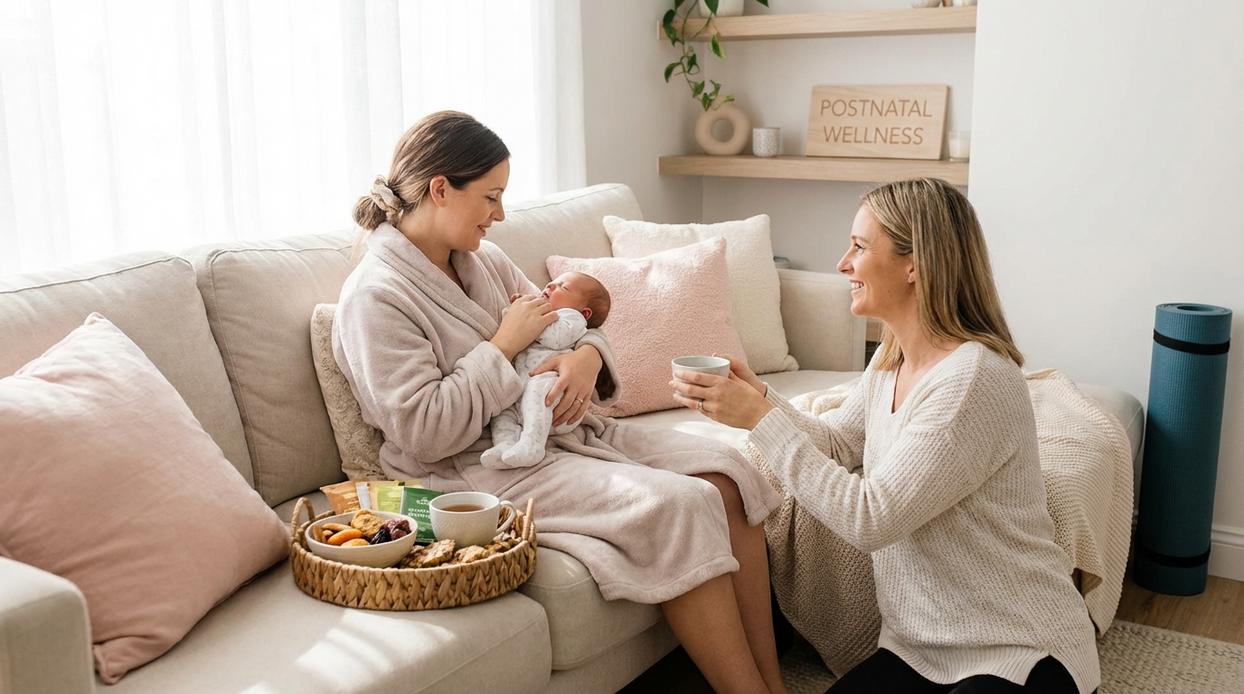
Making “Sleep When the Baby Sleeps” Work
You’ve heard it. You’ve rolled your eyes. (Because laundry doesn’t fold itself.) Still, sleep when the baby sleeps can work—if you let chores wait and put your phone in another room. The benefit? Even short, synced naps reduce cortisol levels and improve mood stability (Sleep Foundation). That means clearer thinking and fewer 3 a.m. tears—from everyone.
If winding down feels impossible, try mindfulness practices every mother can try at home as part of your postpartum wellness tips routine.
The ‘Shift’ System
Trading 4–5 hour night blocks gives each adult consolidated sleep, which research links to better cognitive performance and emotional regulation (NIH).
| Strategy | Benefit |
|---|---|
| Night shifts | Deeper, uninterrupted rest |
| Phone-free naps | Faster mental recovery |
| 20-minute reset | Reduced fatigue, sharper focus |
The 20-Minute Reset
Can’t nap? Lie down, eyes closed, for 20 minutes. It’s a neurological reset (think phone reboot), boosting alertness without full sleep. Pro tip: set a gentle timer to avoid clock-watching.
Building Your Village: How to Ask For and Receive Help
First, let’s normalize this: new parents aren’t meant to do this alone. In fact, research shows that strong social support is linked to lower rates of postpartum depression and anxiety (CDC). Yet when someone says, “Let me know how I can help,” many of us freeze.
Instead, get specific. Concrete requests make it easier for others to show up. For example:
- “Could you hold the baby for 30 minutes so I can shower?”
- “Can you pick up our grocery order on your way over?”
- “Would you mind loading the dishwasher before you leave?”
Clear asks reduce mental load—a key factor in parental burnout, according to studies in the Journal of Child and Family Studies.
Next, consider delegating visibly. Keep a short list on the fridge: take out trash, fold laundry, wipe counters. When visitors arrive, they can choose a task (people often want direction, not guesswork).
At the same time, protect your energy. It’s okay to say, “We’d love a short visit between 2 and 3,” or “Please text before stopping by.” Boundaries support bonding and recovery—core postpartum wellness tips grounded in maternal health research.
Finally, find your community. Local parent groups and lactation circles improve confidence and reduce isolation, studies show. Over time, your village becomes less of a metaphor—and more of a lifeline.
Your Wellness is Your Family’s Foundation
Postpartum wellness isn’t indulgent; it’s essential. It means caring for your physical recovery, emotional balance, and mental clarity after birth. When those needs are ignored, you are asked to pour from an empty cup. Small, steady postpartum wellness tips work because consistency builds resilience. Resilience simply means your capacity to adapt without breaking. Some argue self-care steals time from family; actually, it strengthens the whole unit. Think airplane oxygen masks—secure yours first (yes, really). Choose one small tip from this list to try today. You are worthy of this care and support. Start now.
Embracing Your Postpartum Journey with Confidence
You came here looking for reassurance, clarity, and practical guidance for navigating the emotional and physical changes after birth. Now you have a clearer understanding of how small, intentional habits can support healing, strengthen family bonds, and protect your well-being during this tender season.
The early postpartum stage can feel overwhelming—sleepless nights, shifting hormones, and the pressure to “bounce back” quickly. But with the right postpartum wellness tips, you can move from simply surviving to feeling supported, steady, and empowered in your new role.
Don’t let exhaustion and uncertainty take over. Give yourself the care you deserve and lean into routines that truly nurture you. For more trusted guidance, practical support, and daily encouragement designed for modern parents, explore our latest resources now and discover why so many families turn to us for real-life solutions that work. Your well-being matters—start prioritizing it today.
 Parenting & Wellness Specialist
Ronald Hernandezianso writes the kind of motherhood wellness ideas content that people actually send to each other. Not because it's flashy or controversial, but because it's the sort of thing where you read it and immediately think of three people who need to see it. Ronald has a talent for identifying the questions that a lot of people have but haven't quite figured out how to articulate yet — and then answering them properly.
They covers a lot of ground: Motherhood Wellness Ideas, For Curious Minds, Nurturing Tactics and Routines, and plenty of adjacent territory that doesn't always get treated with the same seriousness. The consistency across all of it is a certain kind of respect for the reader. Ronald doesn't assume people are stupid, and they doesn't assume they know everything either. They writes for someone who is genuinely trying to figure something out — because that's usually who's actually reading. That assumption shapes everything from how they structures an explanation to how much background they includes before getting to the point.
Beyond the practical stuff, there's something in Ronald's writing that reflects a real investment in the subject — not performed enthusiasm, but the kind of sustained interest that produces insight over time. They has been paying attention to motherhood wellness ideas long enough that they notices things a more casual observer would miss. That depth shows up in the work in ways that are hard to fake.
Parenting & Wellness Specialist
Ronald Hernandezianso writes the kind of motherhood wellness ideas content that people actually send to each other. Not because it's flashy or controversial, but because it's the sort of thing where you read it and immediately think of three people who need to see it. Ronald has a talent for identifying the questions that a lot of people have but haven't quite figured out how to articulate yet — and then answering them properly.
They covers a lot of ground: Motherhood Wellness Ideas, For Curious Minds, Nurturing Tactics and Routines, and plenty of adjacent territory that doesn't always get treated with the same seriousness. The consistency across all of it is a certain kind of respect for the reader. Ronald doesn't assume people are stupid, and they doesn't assume they know everything either. They writes for someone who is genuinely trying to figure something out — because that's usually who's actually reading. That assumption shapes everything from how they structures an explanation to how much background they includes before getting to the point.
Beyond the practical stuff, there's something in Ronald's writing that reflects a real investment in the subject — not performed enthusiasm, but the kind of sustained interest that produces insight over time. They has been paying attention to motherhood wellness ideas long enough that they notices things a more casual observer would miss. That depth shows up in the work in ways that are hard to fake.