
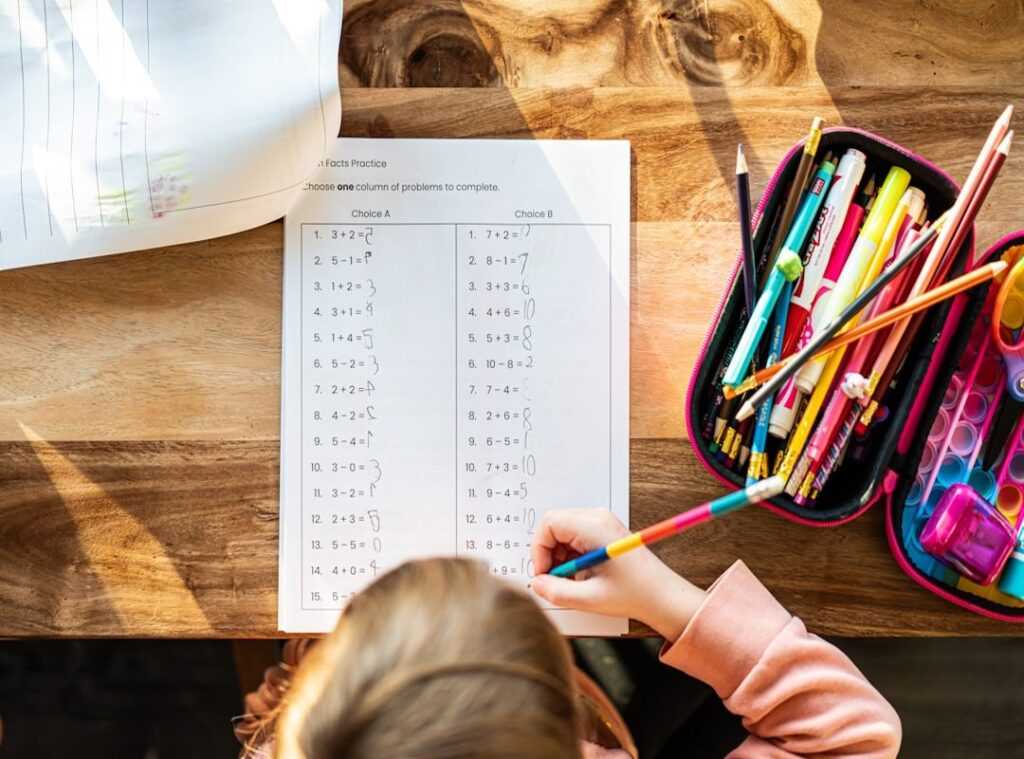
Picture this: you see your child’s math worksheet and feel that familiar anxiety creep in. It’s not just about numbers; it’s about the fear they’ll struggle or grow to hate math. You’re not alone.
Many parents worry about their kids’ relationship with math. But here’s the thing: you don’t need to be a math expert to help.
I’m here to share that building a strong foundation in basic math kids is simpler than you think. Forget the drills. Think play and connection.
Everyday moments can teach math naturally.
As a fellow parent, I get how daily life feels like a juggling act. But I promise this: by the end of this article, you’ll have easy, practical ideas that fit seamlessly into your routine. Let’s make math a joy, not a chore.
Math Foundations: Building Blocks for Life
Let’s get one thing straight: basic math for kids isn’t about chiseling out the next Einstein. It’s about setting up a solid foundation, like the base of a house. Without that, everything crumbles.
Early math skills are like those first blocks in a game of Jenga. They teach problem-solving skills. When kids figure out which block fits where, they’re setting themselves up for solving life’s bigger puzzles later.
You wouldn’t build a mansion on sand, would you? The same goes for learning.
And let’s talk about key thinking. Sorting Legos or even laundry (yes, laundry) isn’t just busy work. It’s teaching classification and logic.
These are the skills that will help them decide between a hundred different life choices, from science projects to choosing the right job someday.
Confidence is another biggie. Nailing that tricky math problem gives kids a ‘can-do’ attitude. They’ll feel ready to tackle anything, whether it’s reading a new book or making daily decisions.
Speaking of which, if you’re looking to encourage love for reading, math can be a surprising ally.
In the end, these skills aren’t just for math class. They’re for life.
The Core Four: Math Essentials for Young Minds
Alright, to what really matters when teaching math to kids. You might wonder, where do we even start? Simple.
We start with the basics that build a foundation for everything else. I’ve seen it time and time again. These concepts are the building blocks.
They’re what make “basic math kids” click.
First up, Number Sense. This isn’t just about counting to ten. It’s about understanding that “three” isn’t just a word.
It’s a specific quantity. A real amount. You know what I mean?
Try this: ask your kid to bring you two books. Watch as they learn that “two” is more than a sound. It’s real and tangible.
Next, we have Shapes and Spatial Awareness. This is early geometry for the little ones. Think about it as understanding their world.
Kids need to know how things fit together. Where is the plate? Under the napkin.
Building a tall tower with blocks is perfect for this. It’s practical and it sticks. It’s like kids figuring out how their world is structured.
Now, onto Sorting and Patterns. Early algebra, if you will. Recognizing patterns like red, blue, red, blue sets the stage for future math learning.
How about sorting socks by color? Or arranging forks and spoons in a pattern? Even clapping a rhythm works (and it’s fun, too).
These activities are not just play. They’re learning in disguise.
Last but not least, Measurement and Comparison. This is where kids learn about big vs. small, heavy vs. light. Real-world stuff.
Ask your kid, “Which toy is heavier?” Or let them pour water into the tub with a cup. Everyday examples make these concepts stick.
And hey, if you’re looking to expand on these basics, check out basic math kids. They’ve got great resources to support your child’s learning journey.
So there you have it. The core four math concepts that every young child needs. They’re simple, manageable, and more important than you might think.
Start with these, and you’ll see the difference. Trust me, it’s worth it.
Turn Your Day into a Math Adventure
Teaching kids math doesn’t need fancy tools. You don’t need to break the bank on educational toys. Really.

Everyday life is filled with math lessons waiting to be discovered.
In the Kitchen
Cooking is more than just about food. It’s a math lesson in disguise. When you bake, you’re not just making cookies (though, yum).
You’re counting ingredients. Two eggs, three cups of flour. Every measurement is a chance to understand numbers better.
And setting the table? Let your child count the plates, forks, and spoons. It’s about recognizing numbers in your daily routine.
During Playtime
Playtime is a goldmine for basic math kids. Building blocks teach shapes and heights. Ever thought of that?
Stack them up and count how high you can go. Or sort toys by color, size, or type (all the cars here, all the dolls there). It’s a fun way to learn categorization and counting without them even realizing they’re learning.
Out and About
A simple walk can be a math lesson. Ask your kid to count the dogs you see or spot circles (wheels) and rectangles (windows). It’s about seeing the world differently.
And the grocery store? Weighing produce is a real-world math problem. Let them count items going into the cart.
It’s practical and they’ll love being involved.
At Bedtime
Reading books isn’t just for stories. Choose ones that involve counting or shapes. “Ten Little Ladybugs” is a great start. Before turning out the lights, have a ‘shape hunt’ in their bedroom.
Can they find a square or a circle? It’s a quiet way to wind down while reinforcing math concepts.
You might wonder, “How does this compare to bigger lessons, like exploring space with children?” Well, Exploring Space With Children is another way to bring math and science into play. But starting with these simple activities grounds kids in everyday math.
So, what are you waiting for? Turn your day into a math adventure and watch your child discover the world through numbers. It’s all about making math fun and approachable.
No textbooks or calculators needed. Just a bit of creativity and everyday life.
Keeping Math Fun: Sidestep the Stress
Math should be a joy, right? But sometimes, it turns into a stress monster. Here’s how to keep it light for basic math kids.
- Ditch the Drills: Ever notice how flashcards can turn math into a chore for kids? Instead, let them play. Games are solid teachers at this age.
- Watch Your Words: Saying “I was never good at math” might seem harmless, but kids soak it up. Be mindful of your language.
- Focus on the Process, Not the ‘Right’ Answer: We all love a correct answer. But praising effort and thought process builds resilience. It’s not about getting it right every time; it’s about learning.
- Follow Their Lead: If they’re not into a math game, move on. Try something else later. No need to force it.
Pro tip: Turn everyday activities, like cooking, into math lessons. It’s like sneaking vegetables into mac and cheese.
Build Confidence in Math without Stress
You don’t need workbooks or stress to help your child grasp basic math kids. It’s about using simple, everyday moments to teach counting, sorting, and comparing. Why not start today?
You’ve got everything you need right at home. Pick one activity from this list and give it a shot. Your child’s growing love for learning?
That’s the real reward. Ready to watch them thrive in math? Dive in now and see the difference for yourself.
 Head of Content & Family Insights
Stephen Scottivonic has opinions about scoop family bonding moments. Informed ones, backed by real experience — but opinions nonetheless, and they doesn't try to disguise them as neutral observation. They thinks a lot of what gets written about Scoop Family Bonding Moments, Motherhood Wellness Ideas, Daily Parenthood Highlights is either too cautious to be useful or too confident to be credible, and they's work tends to sit deliberately in the space between those two failure modes.
Reading Stephen's pieces, you get the sense of someone who has thought about this stuff seriously and arrived at actual conclusions — not just collected a range of perspectives and declined to pick one. That can be uncomfortable when they lands on something you disagree with. It's also why the writing is worth engaging with. Stephen isn't interested in telling people what they want to hear. They is interested in telling them what they actually thinks, with enough reasoning behind it that you can push back if you want to. That kind of intellectual honesty is rarer than it should be.
What Stephen is best at is the moment when a familiar topic reveals something unexpected — when the conventional wisdom turns out to be slightly off, or when a small shift in framing changes everything. They finds those moments consistently, which is why they's work tends to generate real discussion rather than just passive agreement.
Head of Content & Family Insights
Stephen Scottivonic has opinions about scoop family bonding moments. Informed ones, backed by real experience — but opinions nonetheless, and they doesn't try to disguise them as neutral observation. They thinks a lot of what gets written about Scoop Family Bonding Moments, Motherhood Wellness Ideas, Daily Parenthood Highlights is either too cautious to be useful or too confident to be credible, and they's work tends to sit deliberately in the space between those two failure modes.
Reading Stephen's pieces, you get the sense of someone who has thought about this stuff seriously and arrived at actual conclusions — not just collected a range of perspectives and declined to pick one. That can be uncomfortable when they lands on something you disagree with. It's also why the writing is worth engaging with. Stephen isn't interested in telling people what they want to hear. They is interested in telling them what they actually thinks, with enough reasoning behind it that you can push back if you want to. That kind of intellectual honesty is rarer than it should be.
What Stephen is best at is the moment when a familiar topic reveals something unexpected — when the conventional wisdom turns out to be slightly off, or when a small shift in framing changes everything. They finds those moments consistently, which is why they's work tends to generate real discussion rather than just passive agreement.